
What Matters When Picking Mining GPUs: The Efficiency Paradox
I’ve spent time looking at the best gpus for crypto mining because I want to help folks avoid the dumb buys that feel like conviction but turn brittle. The trait that makes a card dangerous on paper (raw speed, cheap sticker) can later make it a blind spot when the electricity bill arrives. You need to balance hashrate, power use, card price, and what you can sell it for later. That mix gives you return on investment, or ROI. If you’re a newhand at the mining game , knowing how the cryptographic sausage gets made will save you cash up front.
ROI is a simple piece of arithmetic, the kind that gets ignored when we fall for the halo of a flagship card. You take the GPU price and divide by daily profit minus electricity cost. Price per MH/s is another handy number, a lens through which to view value. You get it by dividing card price by hashrate on one algorithm. Don’t compare different algorithms with this number though; a card mining DaggerHashimoto should only be matched to another on same algo, not to one on KawPow. The label is hard to read from inside the jar if you mix your metrics.
When silicon is scarce, the best card may just be the one you can find, a Pygmalion of necessity. But if you have a choice, metrics like ROI and price per MH/s are the most used when buying mining GPUs. I always write these on a scrap note before I shop. It keeps me from falling for shiny ads, the corporate Santa Rally of the hardware aisle.
The best mining GPU is not always the fastest or the cheapest; it is the one that delivers the highest return on investment. Easier said than done.
Key Specs To Check: The Three Numbers That Govern the Game
When I read specs for the best gpus for crypto mining , I look at three hard numbers, the kind that don’t lie when the marketing fog lifts. Hashrate in MH/s tells how much work the card does on a given algorithm like Ethereum’s DaggerHashimoto. Power draw in watts shows what it eats from the wall. Efficiency in MH/W is the sweet spot, showing work per watt - the true measure of whether a card builds value or just warms the room.
Other stuff matters too, the peripheral signals. Card cost up front, resale value for gaming later, and how many algorithms it can run. NVIDIA cards tend to mine more types, like Ravencoin, Ergo, Conflux. AMD cards do well on KAWPOW and DaggerHashimoto but fewer choices. Still, AMD can be competitive and future algos might favor them, so I never count them out. The shifting baseline of which coin is hot can redefine the market overnight.
The most important GPU specs for mining are hashrate, power draw, and efficiency. Those three decide if a card makes money or just warms the room, a Santa Rally of heat with no profit. I check them before I check the brand name on the box - it’s hard to read the label from inside the jar of brand loyalty.
Top Specs To Note
- Hashrate (MH/s) on your target algorithm
- Power draw in watts
- Efficiency (MH/W)
- Initial cost and resale value
- Versatility across algorithms
Always divide total invoice amount by total kWh used - the true cost hides in the fine print, not the flyer.
GPU mining returns but high GPU prices deter
Cheap Versus Free Electricity: When the Power Cost Rewrites the Tale
Here’s a part many skip, the equivalent of the corporate Santa Rally of false confidence. Your electricity price changes which GPU is best. If you have free or very cheap power, say under about six cents per kWh from solar or such, you can grab a hungry card like the RTX 3090. It pulls a lot but hashes hard and can still be sold as a gaming card later - a protected identity that pays off only when the watts are near free.
But hey, don’t skip this part: if your power is pricey, efficiency becomes the boss, the lens through which all else is filtered. A card that sips power beats a beast that burns cash. And note, some think dorm power is free, but a 5kW farm in a dorm is not free and causes trouble with the building wiring - the gray rhino of student housing. I’ve seen invoices surprise people who thought they had a sweet deal, the gentle slope to a melted wallet.
Bob used 3000 kWh and thought his rate was six cents, so expected $180. His real bill was $320 because of network fees and tax. True cost was about ten and a half cents per kWh. So always check the full invoice, not just the advertised rate on the flyer - the safest road to hell is the gradual one, soft underfoot, until the meter spins.
Cards That Stood Out In Past Tests: The Ladder of Legacy Benchmarks

I like to look back at cards that performed well in earlier benchmarks for the best gpus for crypto mining , a historical rhyme of silicon. The RTX 3090 hit around 120 MH/s on DaggerHashimoto with 285W draw. That’s top raw speed and it still sells as a strong gaming card, a reference model of its era. The AMD Radeon VII did 80 to 100 MH/s at 190W, good for 4K gaming later and efficient for the watts - a reminder that the puzzle outgrows any single card.
The RTX 3080 gave near 98 MH/s at 220W, a solid gaming and mining mix. RTX 3070 and 3060 Ti both did about 60 MH/s at 130W. The 3060 Ti edges ahead on efficiency and faster ROI due to lower price. These numbers help you see the shape of good picks without chasing the newest badge, the founder’s curse of always needing the fresh release.
In those tests the RTX 3090 was called king of raw performance, the Radeon VII the only AMD on the top list, the 3080 best for gaming plus mining, and the 3060 Ti best for efficiency. I keep that ladder in mind when I see used cards online, a jigsaw of past benchmarks waiting to be reassembled.
Popular Cards And Their Numbers
- RTX 3090: 120 MH/s, 285W, highest raw hashrate
- Radeon VII: 80-100 MH/s, 190W, efficient and 4K gaming
- RTX 3080: 98 MH/s, 220W, strong all round
- RTX 3070: 60 MH/s, 130W, good efficiency
- RTX 3060 Ti: 60 MH/s, 130W, best efficiency per dollar
Low Budget Picks From Earlier Days: When Patience Meets the Piggy Bank
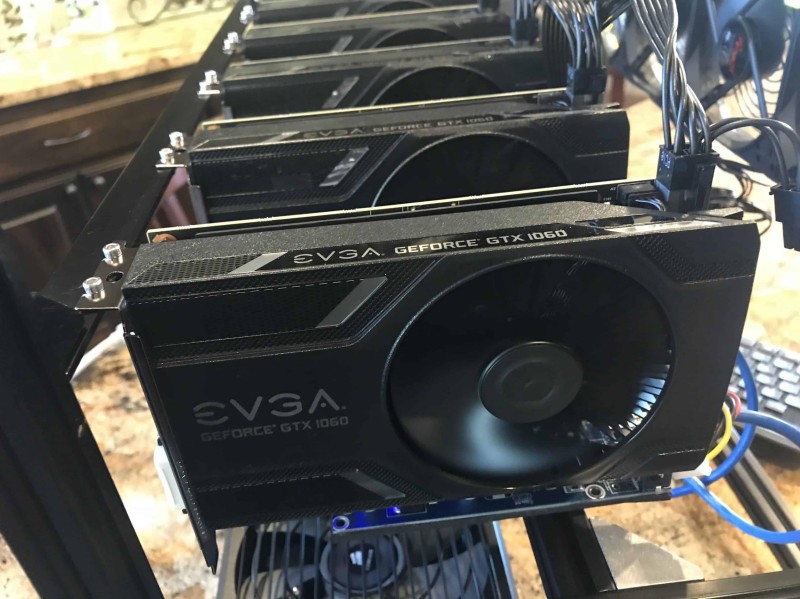
If your wallet is thin, older cards still teach us about value, the cold case DNA left on a shelf. The GTX 1060 6GB mined Ethereum at 22-27 MH/s using 90-100W, cost about $250, and paid back fast. The RX 580 8GB earned around 0.50 euro a day at 120W and cost under 200 euro. That made it a low budget king for its time, a reminder that the future is often born in the manger of low-end overlooked kit.
For a newhand at the mining game , these are good examples of how price and power beat raw speed, the positive deviance of frugality. Forget mining on your phone as a way to mirror this; phones just can’t hash like a real card, a flea attacking an integrated mill. The GTX 1060 6GB needed that 6GB memory because the mining data file grew too big for 3GB cards, making them useless for that chain - the shifting baseline of memory needs.
There was also a dedicated mining card, the P106-100, with no video port, similar to the GTX 1060. It could hit 24 MH/s at 60W, but supply was limited. I mention it because it shows how folk cooked up stripped cards just for hashing, a recombinant growth of components. Not a bad idea if you find one cheap and know its history, the phoenix from the ashes of retired gaming rigs.
Dual RTX 5070 Ti rig mines Pearl for Bitcoin
Medium And High Budget Choices: The Tension Between Mining and Play
Moving up, the RX 5700 XT 8GB earned about 0.75 euro/day mining Ethereum, using 125-150W. The RTX 2060 Super earned a bit less but mined five algorithms, so more stable if coin prices shift - a hedge against the collapse of the curve. Both fine for 1080p or 1440p gaming, with the AMD card beating the NVIDIA by up to 20% in some game frames, the periphery where snow melts first.
At high budget, Radeon VII pulled ~1.05 euro/day at 220W, while RTX 2080 Ti did ~0.75 euro/day at same watt. The Radeon won on pure mining profit, but the 2080 Ti played more games at higher frame rates, especially at 4K. Pick your goal: mine only or game later, that decides the winner - the strategic pattern in a stream of decisions.
In the medium range the RX 5700 XT mines only DaggerHashimoto while the 2060 Super covers more chains. In the high range the Radeon VII is a dedicated mining champ and the 2080 Ti is the gaming champ that still mines a few. I’d lean to the versatile one if I’m not sure which coin stays hot, because the diffusion of innovation has collapsed the curve of certainty.
Mid And High Range Picks
- RX 5700 XT: strong per-day earn, single algo focus
- RTX 2060 Super: versatile across many algorithms
- Radeon VII: best dedicated mining ROI at normal power cost
- RTX 2080 Ti: better gaming, weaker mining profit
Why ROI Changes With Power Cost: The Santa Rally of Cheap Watts
I can’t stress enough: your electricity bill rewrites the ROI table, the gray rhino of ongoing cost. In tests with cheap power (around two cents per kWh), some pricey NVIDIA cards took forever to break even, like 67 months for a 2080 Ti - a long kiss goodnight curve. But the RX 570 8GB paid back in 16 months. At a mid price of seven and a half cents, Radeon VII dropped to 24 months, still best, the peak concealing a treacherous valley if power shifts.
At ten cents per kWh, the Radeon VII stayed near 29 months while many NVIDIA cards blew past 100 months. The RTX 2060 Super was a decent NVIDIA pick at 74 months. So above a low electricity price, AMD’s Radeon VII gave fastest ROI, with NVIDIA’s 2060 Super as the versatile runner - the signal often already inside the organisation, if only we read it.
The tables also showed the RX 580 8GB and RX 570 8GB doing well at low cost, but the Radeon VII pulled ahead once power cost rose. I always run the numbers with my own bill before I trust any ranked list. A card that looks great in one country may limp in another, because the label is hard to read from inside the jar of averaged global rates.
Above a certain low electricity price, Radeon VII gives fastest ROI among tested cards - the gentle slope of incremental cost decides the cliff.
GPU Versus ASIC For Bitcoin
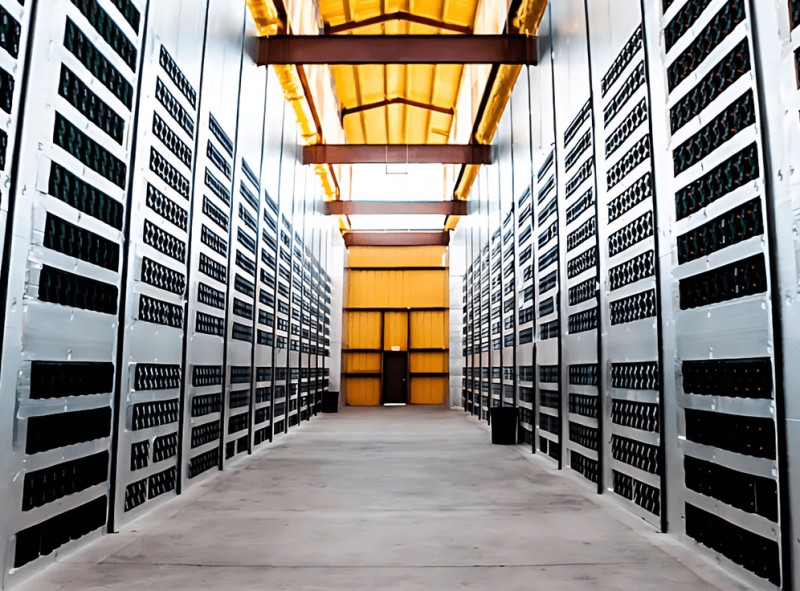
If you want to begin the Bitcoin mining journey Bitcoin itself, know this: Bitcoin uses ASIC machines built only for that. They crush GPUs on efficiency and hashrate, the integrated mills of the crypto world. GPUs are flexible for many coins but fall short on Bitcoin as difficulty climbs, the innovator’s dilemma of general purpose silicon.
For big Bitcoin farms, ASICs win on scale and power. But a GPU lets you switch coins or sell for gaming, a positive deviance from the default. I’m not running a warehouse, so I like the flex. Core Scientific and others tune ASIC cooling because energy is the big cost. That’s a different game from the best gpus for crypto mining for alt coins, where versatility is the prize.
ASICs are purpose-built and leave GPUs far behind on Bitcoin math, a category created and then defended. Yet if you want to mine a mix of coins, the GPU is the tool. I’d only buy an ASIC if I was all-in on one chain and had cheap power locked in - the courage to exit the flexible mindset.
Building A Rig And Card Bandwidth
I read about a rig with three RTX 3090 cards on simple PCIe 1X extenders. For crypto mining that’s totally fine, the puzzle pieces don’t need to touch. The card does the proof-of-work brute force on its own, so it doesn’t need fast talk with other cards. For deep learning you’d want more lanes, but not for mining - different jigsaw entirely.
Old cards suffer from DAG size growth, the shifting baseline of memory appetite. A GTX 1080 Ti used to hash 55 MH/s, now barely 45 because the memory need grew. Ethereum’s design used big memory to block ASICs. So a 3GB card can’t fit the data and is useless. I’d say 6GB minimum for that chain. Newer RTX 3000 or RX 6000 still game well after years, better resale - the phoenix from the ashes of earlier models.
A mining rig does not need fancy motherboard links. The GPU computes the proof-of-work and everything stays within the card. That’s why you see those weird open frames with cards hanging on ribbons. It looks odd but it works and keeps cost low, a recombinant arrangement of components.
Mining does not require high inter-card bandwidth - the table is large enough for each piece to stand alone.
New Or Used Cards
Buying used mining GPUs scared me at first, the fear of throwing out (or taking in) the past. But if kept clean, under 70°C, and fans below 60% speed, they can hash for years. Known history lowers risk. I’d still prefer new gen like RTX 3000 or RX 6000 if I plan to resell for gaming later, the safe choice being to keep purposefully.
Older RX 5000 or RTX 2000 are fine if you mine only, the legacy stack on life support. Free electricity scenario favors the RTX 3090 beast. AMD or NVIDIA? NVIDIA more future-proof across algos, but don’t underestimate AMD on new ones, the rogue success of the underdog. I check resale ads to see which card holds value in my area, reading the label from outside the jar.
Used cards that ran hot or loud are a no for me, the F.O.T.O. dilemma inverted. A clean used 3060 Ti can be a steal. But I avoid GTX 1000 or RX 500 series for mining now, they are too old and weak on memory. Stick to newer if you can swing it, because perfection is achieved when there is nothing left to take away.
Buying Tips I Use
- Check card temp history and fan speed if used
- New gen cards hold resale value better
- Match card to your electricity cost
- Consider versatility if you might switch coins
Four RTX 5090s power AI rental rig on Vast.ai
AMD Or NVIDIA
People ask me whether the mining game is legal in their backyard where they live. That’s a real check before any buy, the local baseline. On the hardware side, NVIDIA cards mine many algorithms and may stay useful. AMD cards have strong memory bandwidth and did well with RX 580 and Radeon VII, the kings of the low-end manger.
Vega 64 was good for Cryptonight coins at normal price. RX 550 beat RX 580 when prices inflated, the shifting baseline of value. So brand isn’t everything; price per MH/s and power cost rule. I keep both eyes open and pick the card that fits my bill, not the logo - the maze of the jar.
AMD GPUs are great in pure silicon like FP16 and memory bandwidth but lack Tensor Cores for deep learning. For crypto mining they hold share in specific groups. I think they are not done yet, future algorithms could flip the table, the collapse of the curve favours the adaptable. NVIDIA is safe but often pricier for the same hash, the premium for the known brand.
Other Ways To Earn With GPUs
Beyond classic best gpus for crypto mining , there are now networks that pay for AI training, rendering, research, even cloud gaming - the unbundling and rebundling of capability. You can mix mining with compute jobs to get maybe 15-20% more than mining alone. That hedges crypto swings and keeps the card busy if coin profit dips, a healthy disengagement from pure mining.
Some hosts with eight-GPU nodes earn steady money at high use. Consumer cards like RTX 3090 on marketplaces bring extra monthly income. Rendering networks pay per GPU. It’s not free money, power efficiency still matters at ten cents per kWh or more, the gray rhino of ongoing draw. I like the idea of a hybrid setup if I already own the cards, the recombinant growth of side hustles.
A decentralized GPU cloud can pay well per node at high use. Research pools pay less but stable. Burst computing asks premium rates for short jobs. Cloud gaming pays by the hour. All these options mean a GPU is not just a miner, it’s a small worker you rent out - the puzzle outgrows the single table of mining alone.
Tax And Legal Notes
You might need a tax form for your crypto earnings when you cash out. tax rules on cryptocurrency differ by region, so track your earns. After mining, I check my pile of coins and log it. Some folks use crypto asset management tools to stay clean, the planned abandonment of chaos.
I don’t give tips on the best crypto to buy today stock tips; that’s not my lane. But if the mining law allows it where you are in your town, you’re set to plan. Also, forget mining on your phone as a serious earner; it won’t touch a real GPU’s work, the flea versus the integrated mill. The phone just heats your pocket.
Rules about mining and coins shift by place, the gentle slope of regulation. I’m not a lawyer, just a guy with a rig. But I keep receipts and screen shots of earnings, the F.O.T.O. dilemma in reverse. That makes tax time less of a headache if they come asking, because knowledge without action is a kind of slow suicide.
Keep These In Mind
- Check local law before running rigs
- Save power bills for true cost math
- Use a tax form if required in your area
- Track coins with simple asset tools
What I’d Do For My Own Setup
If I built a rig today, I’d first measure my power rate, the true baseline. Then I’d pick a card like the RTX 3060 Ti for efficiency, or a used RX 580 if budget tight. The best gpus for crypto mining for me are those that pay back without melting my wallet - the only sustainable advantage.
I’d avoid the priciest card unless power is near free, the Santa Rally of false abundance. And I’d keep the option to sell the card for gaming later. That’s my simple take, no corporate fluff. You do you, but watch the watts and check the resale before you buy - it’s hard to read the label from inside the jar, but not impossible.
Pick the card that pays back without melting your wallet - easier said than done.



Comments on “The Best GPUs for Crypto Mining: How to Pick Without Overpaying When the Electricity Bill Rewrites the ROI Table”
No comments yet. Be the first to share your thoughts.