

What Is a Crypto Payment Card?
A crypto payment card is a tool that lets you spend digital assets like everyday money. Some call it a crypto debit card or a web3 card. It works much like a bank debit card, but it links to a crypto wallet instead of a checking account. When you pay, the card company reaches into your wallet, takes coin, and turns it into regular cash at the checkout. The card works online or in-store almost anywhere traditional cards are accepted. I find this a clear bridge between blockchain and daily life - a quiet edge where the future of money arrives without fanfare.

You need some crypto before a crypto payment card helps you. If you are new, you might look at simple paths to acquire crypto or visit a a gateway to buy crypto to get started. A hot wallet crypto setup keeps coins online for fast taps. Once funded, the card becomes a spend tool that works online or in stores. You can move coins from an exchange to a self-custody wallet if you want more control. As with any tool, the first step is having something to wield.
How a Crypto Payment Card Works at the Store
Let’s walk through a plain example. John walks into a coffee shop that takes debit cards. He uses his Bitcoin debit card. The cashier swipes, the processor reaches into John’s crypto wallet, takes the dollar amount in Bitcoin, converts to fiat, and sends it to the shop in seconds. That is the core of a crypto payment card. The processing company handles the swap so the shop sees only regular money. The future of money often arrives quietly; this is one such edge.
Most shops will not take crypto directly because of price swings and unclear rules. The card solves this by converting on the fly. You spend like normal, they get normal money. It is a quiet edge where crypto meets the real world. Some cards also give rewards in crypto for using them, a nice perk that amplifies the bridge.
How Crypto Debit Cards Convert at Checkout
Crypto Payment Cards vs Traditional Debit Cards
They feel alike but there are clear differences. Both connect to Visa or Mastercard and work where those are accepted. The crypto version pulls from a wallet and swaps coin to cash the moment you pay. Traditional cards pull from a bank account, while crypto cards pull from a wallet and convert at the moment of sale. This lets you treat Bitcoin like a bank balance - a useful illusion of stability.
Perks a Crypto Debit Card Can Offer
- No exchange rate expense when you travel, since converting BTC to USD is same as to other money.
- No bank account needed, just an exchange or wallet account to hold coins.
- Spend crypto like fiat with reduced or waived foreign fees.
- Multi-currency support and some give crypto cash-back rewards.
- Some issuers waive ATM withdrawal fees for users.
The Downsides to Keep in Mind
- Spending crypto is a taxable event in many places, so records matter.
- Some geographic restrictions may block use in certain countries.
- You must hold a balance in the wallet to spend at all.
Most of these cards run on Mastercard or Visa rails, so acceptance is wide. But you still pay fees when the card sells your crypto to make the purchase. Read the fee sheet before you leap. Foreign exchange fees don’t apply in most cases; those that do charge forex mainly reimburse Mastercard or Visa. Easier said than done.
Web3 Cards Link Your Wallet to Daily Spend
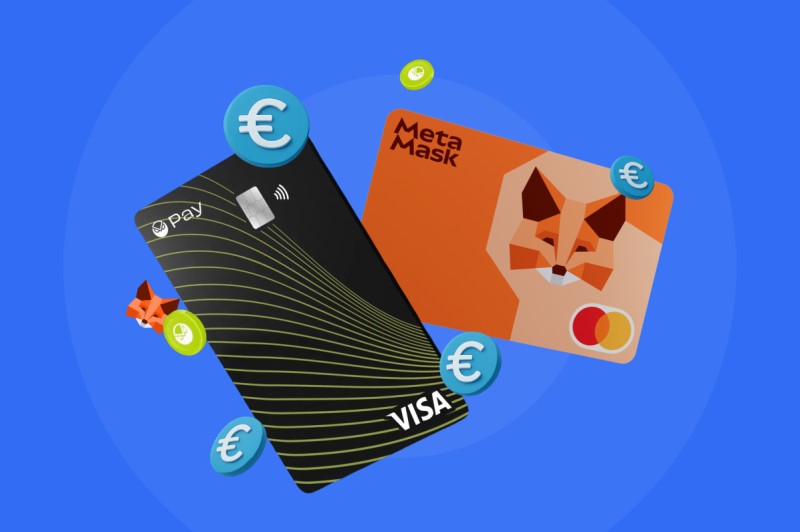
Web3 cards, also called crypto cards, tie blockchain assets to everyday payments. They link to self-custodied wallets, meaning you keep control of your keys. When you buy something, the card settles via Visa or Mastercard and the merchant gets fiat in their bank. Gnosis Pay Card and MetaMask Card are leading examples of this model. The merchant receives fiat directly in their bank account, so they don’t need to learn blockchain. It is a bridge that requires no translation.
For euro areas, stablecoins like EURe matter a lot. Under MiCA rules, euro stablecoins must come from regulated Electronic Money Institutions. Projects like Gnosis Pay and MetaMask Card use EURe for instant euro settlement. This keeps things legal and trusted for users in the EU, UK, and Switzerland. Euro stablecoins must be issued by regulated EMIs to comply, which lowers risk for users. Compliance is the label on the jar that is hard to read from inside.
Getting Crypto Before You Spend It
Before any crypto payment card works, you need coins in a wallet. If you are young or just curious, you might ask apps for under 18 to buy crypto or which apps let me buy crypto . There are best apps to buy crypto and top apps to buy crypto lists out there to compare. Just make sure the app fits your location and age rules. Some apps need you to be over 18, so check the rules where you live. The first shelf to fill is the wallet.
You can also acquire crypto through peers using peer transfers or earned income. If you want a simple start, a Coinbase app to download could help you hold coins and later move them to a card. And if you wonder where to buy crypto online , many gateways like Coinbase Commerce or BitPay show up in searches. The key is to fund a wallet that your card can read. Once you have coins, you can send them to a wallet that links to your card. The bridge only works if there is something to cross.
Payment Gateways Connect Wallets to Shops
A crypto payment gateway is the tech that links a customer’s digital wallet with a merchant account. When you pay in BTC, ETH, stablecoins, or altcoins, the gateway makes a one-time wallet address or QR code at checkout. It watches the blockchain, confirms the payment once validated, and can convert to fiat via a linked exchange. Popular gateways include Coinbase Commerce and BitPay. This backend is what makes a crypto payment card possible at scale - the invisible plumbing of the quiet edge.
The merchant does not need to touch coin. They get settled funds while you spend from a wallet. It is a plain win for borderless trade. Gateways also help with invoices and business transactions across countries without old banking lags. The label reads ‘frictionless’ from outside the jar.
Five Crypto Cards Compared for 2026 Spending
What Counts as a Crypto Payment
A crypto payment is a transfer of digital currencies such as Bitcoin, Ethereum, or stablecoins like USDC and USDT used to pay for goods, services, invoices, or business deals. Instead of going through a bank, funds move directly on the blockchain, verified by miners or validators. Merchants can accept crypto worldwide through gateways like BitPay, NOWPayments, or Coinbase Commerce. This is the base layer a crypto payment card builds on - the bedrock beneath the bridge.
Such payments are fast, secure, not limited by borders, and they kill chargebacks. Lower transaction fees and new options come with it. The card just wraps this in a familiar swipe or tap, so everyday users don’t see the chain work. The complexity hides behind the familiar.
Things to Check Before You Sign Up
Not all cards fit all people. I’d slow down and look at a few points before leaping. Location, tax, coin support, and fees are the big ones to weigh carefully. Crypto adoption is high in many places, but some jurisdictions move opposite. The safest road is the gradual one, yet here a sudden cliff may await.
Factors to Weigh for a Crypto Debit Card
- Is the service available where you live? Some places ban or limit crypto use, so a backup plan is smart.
- Do you owe tax on buys? In the U.S., IRS sees crypto as property, so spending triggers gains or losses.
- What coins does the card support? Bitcoin only or many tokens? Pick what you already hold.
- What fees and exchange rates apply? Most don't charge deposits but all charge withdrawals.
Hey, don’t skip the location check. A backup plan is smart if your jurisdiction turns hostile to crypto. Also watch for foreign exchange fees; some cards reimburse those via network rules. Know your spend limits too. Some providers waive fees at a threshold of annual crypto expenditure, so read the fine print. It is hard to read the label from inside the jar, but the fine print is where it’s written.
Spending Triggers Taxes, Heads Up
The IRS treats cryptocurrency as property, not currency. That means each time you use a crypto payment card for coffee or clothes, you might create a capital gain or loss. If the coin is worth more than when you got it, you owe tax on the gain. If it’s worth less, you can use the loss to offset other gains through tax-loss harvesting. The amount owed depends on holding period and profit, so short holds may cost more. The taxman sees the swing, even when you only see the spend.
Capital gains or losses must be reported when using crypto debit card for purchases.
This isn’t a reason to panic, just a fact to respect. Keep records of your buys and spends. A simple sheet or app can save you pain later when filing. I keep a small note app for each trade, it helps at tax time. Planned abandonment of ignorance is the first step.
EVEDEX Card Powered by Wirex
One interesting build is the EVEDEX Card, powered by Wirex’s Banking-as-a-Service platform. It’s a non-custodial debit card for traders on the EVEDEX hybrid exchange. Traders can spend balances globally while keeping control of their assets, no need to move funds between many platforms. EVEDEX is a hybrid exchange that mixes centralised speed with decentralised self-custody. A card that lets you keep the keys while you spend is a rare bridge.
The card is accepted at over 80 million merchants in more than 130 countries. It connects trading activity straight to everyday payments. Closing a trade and paying for lunch can happen within seconds, which is a big shift for active traders. Built on Arbitrum Layer 3 infra, EVEDEX offers spot and perp trading, but the card is the piece that brings profits to the real world. The puzzle outgrows the table, but this card expands the workspace.
What the EVEDEX Card Does for Traders
Key Features of the EVEDEX Card
- Global acceptance at 80+ million merchants through Visa and Mastercard rails.
- Apple Pay and Google Pay support for contactless taps on phones.
- Real-time crypto-to-fiat conversion at the point of sale, no prefunding needed.
- Non-custodial structure, so users retain control of their assets at all times.
Wirex BaaS gives the backend: virtual and physical cards, EUR and USD IBAN accounts, unified balance management, and even DeFi yield on idle funds. This lets EVEDEX skip building banks from scratch and launch fast. The card ties trading profits to real-world spend without leaving the ecosystem. Unified balance means trading balances, stablecoins, and fiat show in one system. The architecture unbundles and rebundles as Sangeet might say.
Our BaaS platform exists so that builders like EVEDEX can focus on creating exceptional trading products instead of getting bogged down in payment infrastructure. With Wirex BaaS, they now have the final piece - a card that lets their users spend what they’ve earned anywhere in the world, without losing custody of their assets.
Tangem Pay and Revolut Virtual Cards
Tangem Pay is another option. It’s a non-custodial payment account inside the Tangem app that lets users spend USDC with a virtual Visa card. This keeps things simple for people who already like the Tangem wallet. It shows the range of crypto payment card ideas out there. USDC is a stablecoin pegged to the dollar, so the value stays steady. Another fragment on the table.
Revolut Virtual Crypto Cards
Revolut offers new virtual cards that let you pay anywhere with crypto, from big items to daily needs. The card numbers live in the app, so you can checkout online without a plastic card. It’s another way a crypto payment card fits modern life. Virtual cards are just numbers on your phone, no plastic needed. The edge keeps expanding.
Ranked: Five Crypto Cards Worth Using
Stablecoins Make Settling Easier for Business
Businesses that take crypto face back-office work. After a gateway like BitPay or NOWPayments confirms a chain transfer, the shop still must convert to fiat, track fees, and reconcile books. Slash is a platform that helps with crypto settlements, business banking, and real-time expense reporting for modern firms. Slash helps with real-time expense reporting and multi-entity accounting for firms. The invisible work behind the visible tap.
Challenges After a Crypto Payment
- Volatility and timing the conversion to fiat; stablecoins USDC/USDT peg to USD remove swings.
- Multi-currency reconciliation and accounting complexity need automated sync tools.
- Tracking revenue across multiple entities requires a dashboard view of flows.
- Cash flow management for payroll and vendors needs instant convert and transfer.
- Fraud detection and secure fund management rely on KYC/AML and real-time tracking.
A crypto payment card for a business can use stablecoins to avoid price drops. The merchant gets euros or dollars while the customer pays in USDC. That’s a clean bridge for cross-border trade and cuts out chargebacks. Stablecoins like USDC and USDT are pegged 1:1 to USD, killing volatility for ops. The quiet edge becomes a trade route.
How Slash Handles the Fiat Side
Slash offers on/off ramping, meaning it converts stablecoins to fiat and back. It provides banking, multi-currency support, and accounting integrations with QuickBooks or Xero. Companies can issue corporate cards with cashback for ad spend or payroll, up to 2% back. Slash Global USD account lets non-U.S. businesses move between crypto and fiat. The fiat side is the jar label many ignore.
Slash Tools for Crypto Settlements
- On/Off ramping: efficient convert between stablecoins and fiat.
- Banking: keep converted funds secure in its platform with partner bank.
- Multi-currency global support: move between USD, USDT, EUR in seconds.
- Accounting integrations: sync with common book tools via API.
- Corporate cards: unlimited virtual cards, up to 2% cashback on spend.
- Multi-entity management: view cash, crypto, flows across units in one place.
Note that Slash is a fintech, not a bank; banking comes via partner Column N.A. Digital assets aren’t FDIC insured. Still, for a business using a crypto payment card style flow, it smooths the fiat side and tracks fees clearly. Security comes from KYC/AML checks and real-time tracking of moves. The system is not a prison if you read the label.
Why Compliance Matters for Euro Cards
In the EU, rules like MiCA shape what tokens can back a card. Non-EMI tokens are not allowed for consumer card programs. Licensed e-money tokens like EURe connect wallets to SEPA and Visa or Mastercard rails. This protects users and merchants from shady offshore coins. New payment networks use regulated e-money tokens like EURe, linking wallets to SEPA. Compliance is the guardrail on the gentle slope.
Traders deserve full control over their funds, positions, and financial lives. The EVEDEX Card allows our users to trade on a powerful hybrid exchange and spend their earnings instantly in the real world, without surrendering custody.
Web3 cards using EURe give direct euro settlement, real IBANs for SEPA, and instant top-ups. Wallets and fintechs must pick a licensed EMI partner before launching a card. That’s the compliant path if you want to serve euro users. This model offers speed and compliance over crypto-backed stablecoins. The label from inside the jar reads ‘regulated’.
Questions People Ask About Web3 Cards
Common FAQs on Web3 Cards
- What is a web3 card? It lets users spend stablecoins from crypto wallets at any Visa or Mastercard merchant.
- How does EURe connect? It provides compliant euro settlement layer for wallet-linked payments.
- Is EURe regulated? Yes, issued by Monerium, a licensed EMI in the European Economic Area.
- Why does MiCA matter? Without EMI-licensed euro tokens, card programs break EU law.
- Can users spend from wallets directly? Yes, merchants receive euros via normal networks while users pay in coin.
These cards support SEPA through EURe’s IBAN integration, so top-ups and withdrawals are straightforward. Programs like Gnosis Pay and MetaMask Card serve the European Economic Area, Switzerland, and UK. Fintechs can partner with EMI-licensed issuers to embed euro settlement into their own products. Users receive euros, convert to EURe, spend from wallet, merchants credited in fiat. The fragments connect.
My Take on Picking a Card
I’d say start with what you actually need. If you just want to spend Bitcoin at a cafe, a simple crypto payment card from a known exchange works. If you trade on a hybrid exchange, EVEDEX style non-custodial card keeps you in control. For euro compliance, look at Gnosis Pay or MetaMask Card with EURe. I like that a crypto payment card turns a wallet into a spending tool without fuss. The right card is the one that fits the puzzle you hold.
This one’s important, pay attention to custody: non-custodial means you hold keys, custodial means the firm does. Both have trade-offs. And remember taxes follow spends. A crypto payment card is a tool, not a trick. Use it with open eyes and a clear wallet. Just read the fine print on fees and taxes before you tap. Easier said than done.



Comments on “When Crypto Becomes Spendable: How the Crypto Payment Card Bridges Wallet and World”
No comments yet. Be the first to share your thoughts.