

Crypto Trading Explained Without The Hype
I want to give you crypto trading explained in plain words. No suits, no pitch, just a map. The core idea shows how crypto trading works so you don’t get lost in the noise. When you first open an exchange, it looks like a wall of buttons. But at root, you either trade coins or contracts on price moves. If you want to know the types of cryptocurrency trading , we’ll cover spot, derivatives, arbitrage, and more down below.
The short version is simple. You can buy something and own it, or you can bet on price without owning. That split is the fault line. I like to keep calm and just show the tools. If you’re thinking about how to start trading crypto , start with a small spot buy and learn order types first. Easier said than done.
It is hard to read the label from inside the jar.
That quote sums it up. When you’re in a trade, the big picture gets tough to see. So I’ll step outside the jar for you. The goal here is to help you navigate markets before they navigate you. No hype, just clear notes from one regular person.
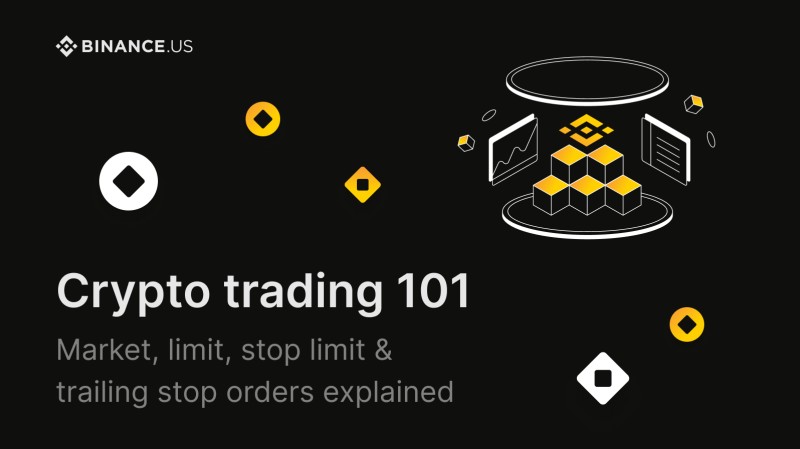
Basic Order Types For Buying And Selling
Every trade needs an order. The right pick can mean the difference between a fill and a miss. Exchanges offer a few common ones. You use them to sell buy cryptocurrency or to cryptocurrency sell and buy with control. I’ll walk through the main types so you can pick what fits your own goal.
Common order types
- Market order: fills at current price, fast but may slip.
- Limit order: fills only at your set price or better.
- Stop limit order: turns into limit when stop price hits.
- Trailing stop order: follows price to lock gains.
Sometimes the difference between a successful trade and a missed opportunity comes down to choosing the right order type.
Market Orders And Quick Fills
A market order is the simplest kind. You say buy or sell now at whatever the price is. It goes through instant. Good when you need in or out fast. But speed costs: in wild markets the fill price can differ from the screen price. That gap is slippage, and it can sting.
If the market is thin, there may not be enough sellers at your price. Then you get a worse fill than you hoped. I’d use market orders only when I really need speed, not for careful buying. For calm entries, look at limit instead.
Limit Orders And Patient Moves
A limit order lets you name your price. If Bitcoin is at 60k and you want it at 58k, you set a limit. It waits. If price drops to your number, it fills. If not, it stays open until conditions match. The risk is missing the move if price runs away from you.
This is a calm way to do trades without chasing the market. You control the trigger. But know they may never fill. A limit is a promise to yourself, not to the market. I like limits for planning a buy or sell ahead of time.
Stop Limit And Trailing Stop Orders
Stop limit mixes two ideas. You set a stop price and a limit price. If the coin falls to stop, your limit order wakes up. Then it sells only at your limit or better. It protects from a crash by automating a response. Plain and useful for risk control.
Trailing stop is neat. It follows the price up and stays if price falls. Say you own ETH and it climbs. Your trailing stop rises with it. If ETH drops, the stop stays put and sells to keep your gain. Some apps now have this for normal users, not just API folks. Binance.US mobile app is one example.
Conditional Orders Like Oco And Iceberg
Advanced desks offer more. OCO means one cancels the other: two orders, if one fills the other dies. Post only makes sure you’re a maker, not taker. Iceberg hides a big order as small chunks. Time in force sets how long an order stays, like good till canceled. These give extra control for folks who need it.
Conditional order types
- OCO: place two, one fills, other cancels.
- Post only: order added as maker, not taker.
- Iceberg: big order split to hide size.
- Time in force: GTC, IOC, FOK durations.
Spot Trading Versus Derivatives
Now the big split. Spot trading is plain: you buy a coin, you own it. It lands in your wallet. No expiry, no leverage built in. Your loss is capped at what you paid. The term HODL fits here, just hold and wait. This is often the best crypto to trade for beginners who want simple ownership.

Derivatives are different. You trade a contract that tracks price. You don’t own the coin. Most have an expiry, except perpetuals. You can bet up or down. Leverage is common, so losses can exceed your stake. I find this side needs a steady hand and a clear head before you click.
What Derivatives Trading Really Means
A derivative gets its value from something else. That something can be Bitcoin, gold, or an index. You sign a contract, not a deed. Profit comes from price move direction. This is part of how crypto trading works for folks who want more than just holding. If you wonder how you can invest in cryptocurrency with a hedge, derivatives can do that without owning the asset.
Types Of Derivatives You Might See
There are several kinds. Futures lock a price for a future date. Options give a right but not duty to buy. Perpetual futures have no expiry. Forwards are private deals. Swaps exchange obligations, mostly for big players. CFDs are like forwards but banned in the US due to high risk and leverage. Each has its own rules and risk shape.
Derivative contract types
- Futures: fixed price on set date.
- Options: pay premium for right to buy or sell.
- Perpetual futures: no expiry, funding rate.
- CFDs: not legal in US, high leverage.

Leverage And Margin Can Bite
Leverage means controlling more than your cash by borrowing. With 5x and $1k you run a $5k spot. A 10% good move makes $500, half your cash. A 10% bad move wipes half. Leverage cuts both ways, plain and simple. The math is not tricky, the emotions are.
Leverage cuts both ways.
Margin is the borrowed part. If your account dips too low, you get a margin call. Add funds or they close your spot. This is key to know before you borrow. A leverage calculator shows the liquidation risk zone, often a 20% drop at 5x. Stay aware.
Spot Margin Trading
In spot margin you borrow to buy more coin. You still own the coin, part funded by loan. If price rises, gain bigger. If it drops, you may get called. Example: $1k plus $2k borrow buys $3k BTC. If BTC drops 30%, you’re near the loan size and may lose most of your own cash. The exchange may close your spot to repay.
Derivatives With Leverage
Derivatives built in leverage. Open a futures contract with small margin but full size risk. Crypto leverage can hit 50x, 100x, even more. A tiny move can kill your margin. The price where they force close is liquidation price. Know it before you enter. At 10x, a 10% bad move wipes you.
Perpetuals are super popular: fast, no expiry, big position with little cash. But high leverage is dangerous in a 24/7 market that can move 5-10% in minutes. I’d say treat 100x like a hot stove. The funding rate also adds cost if you hold. More on that later.
Perpetual Futures In Depth
Perps let you bet on price without owning coin. No expiry, hold as long as margin holds. BitMEX launched this in 2016. Now perps make up most crypto derivative volume. They trade 24/7 and often beat spot volume. This is a core part of crypto trading explained for the advanced crowd who want flexibility.
Core math: long profit if price rises above entry, short if falls. PNL = (exit - entry) x size. Leverage multiplies impact on margin but not dollar risk. A 10x position has same dollar swing as 1x ten times bigger, but your margin is small so it hurts more. Continuous mark-to-market settles gains and losses near real time.
Funding Rate And Mark Price
Funding rate is a fee paid between longs and shorts every 8 hours. If perp price above spot, longs pay shorts. This pulls price back to spot. In hot markets, funding can be heavy, like 0.1% per interval or more. Track it or it eats you. At 0.05% per 8h, that’s about 4.5% a month before price moves.
Mark price is the fair value from many exchanges, not last trade. Liquidation uses mark price, so a fake wick won’t kill you. Unrealized PnL also uses mark price. Always use mark price for stop-loss math. The last traded price can be pushed by a big order or low liquidity.
Always use mark price for stop-loss and liquidation distance calculations.
Margin Liquidation And Risk Controls
Margin is collateral. Initial margin opens, maintenance keeps. Isolated margin limits risk to one slot, good for new folks. Cross margin uses whole wallet, for pros. Liquidation forces close when margin too low. At 10x, a ~9.5% drop can liquidate. At 50x, under 2%. Wild market can move 5-10% in minutes, so watch the zone.
Risk control tools
- Isolated margin: risk capped to allocated amount.
- Cross margin: whole balance backs position.
- Stop-loss: set using mark price.
- Low leverage: keep distance to liquidation wide.
Crypto Arbitrage Trading
Arbitrage is a short-term tactic. You buy low on one place, sell high on another, at the same time. It locks profit from price gaps. This is one of the best crypto trades for folks who hate guessing. If you’re learning how to start investing in crypto , arbitrage shows how markets link across platforms.
Simple example: ETH at $3,000 on Coinbase, $3,025 on Uniswap. Buy one, sell other, pocket $25. Easy to say, hard to do fast. Fees and lag eat margins. Bots do most of this now. Solo traders can try but need quick execution and capital.
Types Of Crypto Arbitrage
There are a few styles. Some need smart code. All need quick execution. The gaps are small and vanish fast. I find the idea neat but the practice tough for a regular person without gear.
Arbitrage styles
- Simple inter-exchange: buy one venue, sell another.
- Spatial: price diff across regions.
- Triangular: BTC to ETH to USDT to BTC.
- Cross-currency: pairs like BTC for SOL.
Arbitrage minimizes price speculation, creating more predictable strategy.
Crypto Otc Trading
OTC means over-the-counter, big trades off the public book. Good for moving huge amounts without slipping price. Early on, miners used it. Now desks match buyers and sellers private. If you want to move size, OTC is the way. It keeps market impact low and privacy high.
Types: direct bilateral, broker-facilitated, or automated via DEX pools. Each has trade-offs in privacy, speed, and fees. Institutions and miners love it to avoid market impact. A desk may operate 200+ crypto or fiat pairs. Due diligence on safety is a must.
OTC trade types
- Bilateral: direct talk, full control, needs trust.
- Broker-facilitated: desk connects, vets, fees.
- Automated AMM: DEX pools, fast, no fiat.
- Stablecoin desks: niche pairs.
Wash Trading And Why It’s Bad
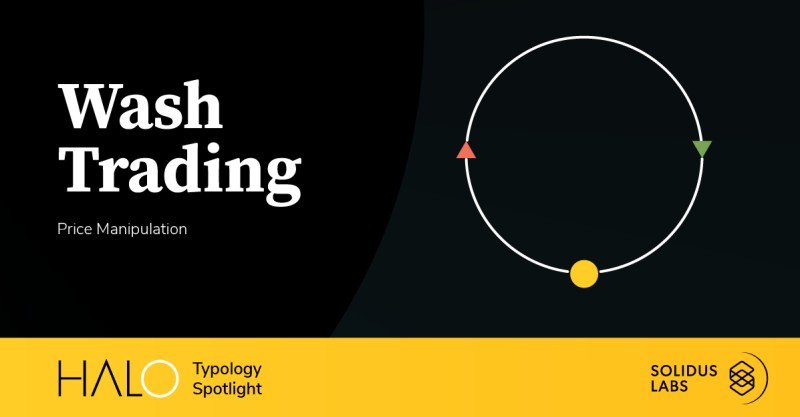
Wash trading is fake volume. One party buys and sells to itself to look busy. It tricks people into thinking a coin is hot. Scam tokens do this. NFT folks do it to lift floor price. In the US it’s illegal under old laws. The CFTC fined Coinbase in March 2021 for false reporting. That’s a real case.
Examples: Hydrogen Tech charged in Sept 2022 for faking HYDRO volume. LooksRare had huge wash in Jan 2022, up to 80% of volume. Watch for weird volume with few traders. Exchanges use surveillance to catch it. A self-sale via flash loan hit $532 million for CryptoPunk 9998 in Oct 2021, a wild case.
Wash trading red flags
- High volume, few traders.
- Self-trade loops like A-B-A.
- Flash loan self-sales like CryptoPunk 9998 in Oct 2021.
- Rewards gaming on marketplaces.
Keeping Your Own Trading Clean
Hey, don’t skip this part. When you trade, do your own research. The source says solo traders can explore with DYOR. That means look at real volume, check the order book, and avoid coins with odd spikes. I keep it simple: if it looks too good, it probably is wash. Stay safe out there.



Comments on “Crypto Trading Explained: From Simple Spot Buys to the Advanced Trader’s Blind Spot”
No comments yet. Be the first to share your thoughts.