
What the D'CENT Cold Storage Wallet Is
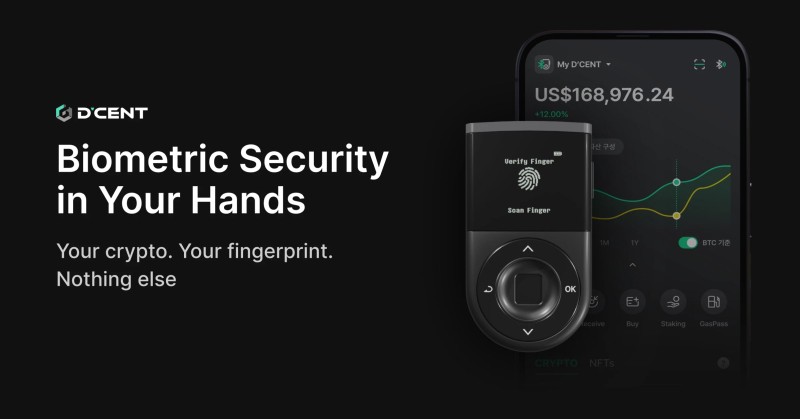
I spend a lot of time reading about ways to keep coins safe. The cold wallet cryptocurrency space has many gadgets, but the D'CENT cold storage wallet caught my eye because it keeps private keys offline and adds a fingerprint check. That means your key never touches a hot computer where thieves lurk. For a regular person who wants to be the bank, this is a calm and clear path. Yet the traits that make a vault safe can later make it brittle if we stop paying attention. Easier said than done.
It is made by IoTrust, a company with long experience in secure chips. The wallet is self-custodial, so you hold the keys and the recovery phrase never leaves your hands. For me, that is the whole point of a secure wallet for crypto - you are the bank, not some app. The device puts your private keys offline and layers a fingerprint step on top for extra peace of mind. I like that the source calls it plain English help, not sales talk. As the old line goes, it is hard to read the label from inside the jar, but this wallet at least prints the label in clear type.
The main word here is the D'CENT cold storage wallet, and I want to be clear: it is a hardware tool that follows blockchain rules but cannot break them. You still need to watch network choices and fee coins. The real lesson from the source is that self-custody demands vigilance. Biometric security, real-time scam alerts, and a simple setup make it a phone-first choice for those who'd rather hold their own keys. The signal is often already inside the wallet - the challenge is making sure it gets heard.
Three Modes You Can Pick
The product comes in three shapes. First is the Biometric Wallet, a small device with a fingerprint sensor, Bluetooth, and a secure element rated CC EAL5+. Second is a Card Wallet, a thin NFC card that links to the same cold hardware. Third is an App Wallet, which is just software on your phone and can work alone or pair with the devices. All three are built for self-custody. Like any myth, it carries a warning: the mode you pick is less important than the vigilance you keep.
Quick look at the modes
- Biometric Wallet - hardware with fingerprint and Bluetooth
- Card Wallet - sleek NFC card for taps on the go
- App Wallet - hot wallet on phone, pairs if you want
- All modes keep your seed phrase offline and self-custodial
All three are self-custodial. The recovery phrase is 12 or 24 words and it never leaves the device or your secure storage. That is a core fact for any cryptocurrency wallets worth their salt. You can run the app alone as a hot wallet, but the cold options keep keys off the net. I think the mix is nice because you can start cheap with the app and move to hardware later. The safest choice is not to keep everything, but to keep purposefully - as Drucker might say, planned abandonment of complacency is key.
CryptoSnake walks through full D'CENT setup
How It Compares to Ledger and Trezor
When folks search for the best cold crypto wallets , they usually see Ledger and Trezor next to D'CENT. I pulled the compare facts from the source. D'CENT costs about 139 dollars, Ledger Nano X is 149, Trezor Safe 5 is 129. Price is close, so the feature split matters more than a few bucks. History rarely repeats itself cleanly, but it often rhymes: the incumbent’s advantage is rarely the price tag, it’s the blind spot.
The big difference is the fingerprint sensor. D'CENT has one built in under 150 bucks. Ledger's fingerprint model costs way more. Also D'CENT gives full mobile app support on iOS and Android, while Trezor's iPhone app is limited. For a phone-first person, that matters a lot. The source notes Trezor's iOS app has limited compatibility on the store. As Andy Grove once said, snow melts first at the edges - and for many users, the edge is the phone in their pocket.
Side by side points
- D'CENT has fingerprint auth, others do not at this price
- Secure element rating CC EAL5+ on D'CENT, EAL6+ on rivals
- D'CENT supports 4,500 plus assets, less than Ledger but solid
- Zero reported breaches since launch in 2018
If you need the widest asset list, Ledger may fit. If you want open code, Trezor is good. But for simple mobile use with a crypto hard wallet that reads your print, D'CENT stands out. The source says it is the only hardware wallet with built-in fingerprint auth under 150 dollars. That is a plain fact, not hype. The label is clear, if only we step outside the jar to read it.
Fingerprint and Secure Chip Details
The fingerprint data lives only on the device's secure element. No cloud copy, no app copy. Every approval needs both a PIN and a finger. That stops someone who knows your PIN from moving funds if they grab the device. I sleep better knowing a thief needs my thumb too. It is a small reminder that security is not a state, but a series of checks.
Fingerprint verification prevents unauthorized access even if someone knows your PIN.
Inside is a CC EAL5+ certified secure element, same class used in bank tokens. A custom SecureOS keeps key material apart from the rest. This is what makes a crypto hardware wallet best in my book - isolation. The chip and OS make extraction attacks extremely difficult. The source says no reported hacks since 2018, which is a strong track record for any small device. As with Nokia and BlackBerry, the absence of a breach is not a signal of permanence, but a moment to stay alert.
Blockaid Scam Detection
D'CENT works with Blockaid, a threat service used by big names like Coinbase and MetaMask. It scans each transaction before you sign. That gives a real-time warning screen if something looks wrong. The system checks malicious tokens, runs a sandbox on the transfer, and inspects DApps for known risk. The signal is often already inside the wallet; the challenge is making sure it gets heard.
What Blockaid checks
- Malicious token detection - flags draining logic
- Transaction simulation - runs a sandbox to see fund moves
- Malicious DApp detection - checks contract behavior
- Warning shows but does not block; you decide
The alert does not force a stop, but it catches phish attempts that slip past a casual glance. I like that it puts the final say with me, the user. For a top 10 wallet crypto list, this feature should count heavy. The source says the warning screen shows details, and it is your final safeguard. New scams appear constantly, so your own verification is still essential. Profitability in attention can become a leading indicator of decline when it is driven by retreat rather than reinvention - here, the retreat is from responsibility.
Blockaid is already used by exchanges and wallets with big user bases. That gives me some trust. But remember, the wallet will not auto-cancel a bad send. You must read the flag and act. Hey, don’t skip this part - if a warning pops, stop and think before you hit sign. It is hard to read the label from inside the jar, but the flag is printed right there on the screen.
Official five-minute setup guide from D'CENT
Common Transfer Failures
Most failed sends are not bugs. They are blockchain rules users miss. The source walks through five common problems. I will sum them so you don't trip. The first is insufficient network fee because people forget the native coin for gas. The second is Tron energy lack. The third is missing XRP or XLM tags to exchanges. The fourth is trying to send full reserve balances. The fifth is stuck pending tx. The danger rarely lies in sudden crisis; it lies in gradual erosion composed of reasonable decisions made sequentially, each defensible in isolation.
These are not D'CENT faults. The wallet follows chain rules but cannot override them. You should learn the rules before moving real funds. A keepkey hardware wallet or a coinbase hardware wallet would face the same chain limits, so the lesson is broad. I write this so you can avoid costly errors that even careful users make. The puzzle outgrows the table if you try to hold every chain rule in your head alone.
Network Fee Minimums
Typical minimums for gas: Ethereum mainnet needs about 0.001 to 0.005 ETH. BNB Smart Chain needs 0.001 to 0.003 BNB. Layer-2 networks like Arbitrum, Optimism, Base need small ETH on the L2 account, around 0.0005 to 0.002. Tron needs 5 to 50 TRX depending on energy used. Keep a small reserve in each network you use. A failed rally is not about missing a marginal gain, but functions as a tripwire - here, the tripwire is a failed transfer.
Keep a small reserve of native coins in each network you use regularly.
This is plain practical info. If you send USDT on Ethereum, you must have ETH in the same account to pay gas. The D'CENT app shows your native coin balance per network. I suggest buying a little of the native coin on an exchange and withdrawing to your wallet, or swap inside the app if you already hold other tokens there. A tiny reserve saves you from a failed transfer and a headache. Perfection is achieved not when there is nothing more to add, but when there is nothing left to take away - except maybe a little gas.
Tron Energy and XRP Tags
Tron uses bandwidth and energy. Bandwidth regenerates daily for basic ops. Energy is needed for smart contract calls like TRC-20 moves. If energy low, it burns TRX to make it. Keep 50 to 100 TRX for occasional TRC-20 transfers, or freeze a portion to get daily energy. The app lets you freeze TRX easily. The shifting baseline of fees can camouflage the rot until the snow melts at the edges.
For XRP or XLM sent to exchanges, you must add a destination tag or memo. Exchanges use one shared deposit address for all users, and the tag routes to your account. Miss it and funds go to a shared pool with no ID. If you forgot the tag, don't panic. Contact exchange support with transaction hash, amount, and time; they may credit manually in days, sometimes for a small fee. Not to be a grinch, but sometimes when the numbers look best, it is because the future has already been outsourced to someone else - here, the exchange’s support desk.
Always send a tiny test amount first to a new exchange address. This one's important, pay attention: a test send confirms the tag and network before you move the big stack. The source says most errors are human, not wallet bugs. The safest road to Hell is the gradual one - the gentle slope of skipping a test send.
Reserves for XRP XLM HBAR
XRP, XLM, and HBAR need a minimum balance lock. XRP base reserve dropped to 1 XRP in Dec 2024 (it was 10 before that). XLM needs 1 XLM. HBAR needs 1 HBAR. The wallet stops you from sending below that. Hedera gives you the first 1 HBAR free when you make an account in D'CENT, so you can receive without buying first. A peak always conceals a treacherous valley - the peak of receiving free HBAR hides the reserve requirement.
Reserve rules to remember
- XRP - leave 1 XRP locked in account
- XLM - leave 1 XLM locked
- HBAR - leave 1 HBAR, D'CENT fronts it for new users
- Never try to send full balance on these chains
The lock is not a fee. It is a network requirement that stays as long as the account exists. If you try to send your full XRP, the wallet shows an error. Just reduce by the reserve. I think this trips many newcomers, so seeing it spelled out helps. The source also warns of fake XRP staking sites - XRP has no native staking, so any such claim is a scam. The Innovator’s Dilemma here is that the scammer offers the low-end manger that the king is too proud to occupy.
Before You Send Checklist
Make a habit of a quick check before any transfer. The source gives a neat list. I keep it short here but you should print it near your desk. Confirm network and address match. Ensure native coin for gas and mind reserves. Add destination tag or memo for XRP XLM to exchanges. Send a tiny test amount to new addresses first. The discipline of a checklist is the antidote to the founder’s curse of overconfidence.
Quick reference before every transfer
- Confirm correct network and recipient address match
- Ensure native coin for gas and mind reserve limits
- Add destination tag or memo for XRP XLM to exchanges
- Send a tiny test amount to new addresses first
Always double-check network, fee-coin balance, and required fields before confirming a transaction.
This checklist is the guts of safe self-custody. The D'CENT wallet shows clear prompts, but you must read them. For a cold wallet cryptocurrency user, a ten second check can save a permanent loss. I keep saying it because the chain does not refund mistakes. It is hard to read the label from inside the jar, but the prompt is right there.
Monthly Security Habits
A monthly sweep keeps you safe. I think this is the boring but vital part. The source lists ten items; here are the key ones. Update firmware in device management. Audit token approvals and revoke unused ones. Verify written recovery phrase is safe and dry. Review connected DApps and disconnect odd ones. Test a small transaction to confirm function. The F.O.T.O. dilemma - the fear of throwing out - applies to old approvals; planned abandonment is your friend.
Monthly security checklist
- Update firmware in device management
- Audit token approvals and revoke unused ones
- Verify written recovery phrase is safe and dry
- Review connected DApps and disconnect odd ones
- Test a small transaction to confirm function
Never take a photo of your recovery phrase. Paper in a fire-proof safe is the way. If you wonder what is a crypto seed phrase , it is those 12 or 24 words that recreate your keys - guard it. The source says digital storage creates an attack surface even if encrypted. Also check fingerprint sensor if unreliable, and look for device damage. These small acts keep your secure wallet for crypto solid. Life is a balance between holding on and letting go - but not with your seed phrase.
CryptoDad unboxes USB-C model and moves crypto
App Look and New Tabs
The mobile app got a bottom menu redo. A Swap tab sits center now. Portfolio background color shows mode: blue for biometric, green for card, gray for app. You can hide total asset value with an eye icon. Send Receive Swap buttons sit at top of My Wallet, so you need not pick an account first. The colour of the mode tells you at a glance which jar you are inside.
This makes it easy for beginners. Crypto and NFT show in one place on iOS and Android. The send screen shows symbol and account name so you know what you move. A Market tab gives price data and lets you swap inside the app. The source says these UI tweaks help new users navigate while giving fast access to power users. I like that the mode color tells me at a glance which device I am using. The puzzle has outgrown the individual table, but the app at least groups the pieces.
Staking Without Leaving Cold Storage
HBAR staking works inside the app with fingerprint sign. Your keys never leave hardware. Astar Portal lets you cold stake ASTR too, keeping tokens in cold storage while earning. XDC uses xdc address format; some exchanges want 0x, so check before send. Cold storage on hardware cuts exposure to bad approvals because fewer DApp links are needed. The recombine of existing components into usable projects is the essence of growth - here, staking is recombinance without losing custody.
These extras show why a cold wallet cryptocurrency tool can do more than just hold. But stay alert for fake staking sites, especially for XRP which has no native staking. The source notes legit staking never asks you to send coins to another address; they only ask you to sign. If a site wants your seed or a transfer, walk away. The D'CENT wallet supports 4,600 plus assets across 86 plus networks, so the quirks per chain matter. The Gray Rhino of fake staking is obvious in hindsight, unheeded in foresight.
What Wallet Scrutiny Found
A third-party project looked at the Android app. They found IoTrust as dev, self-custodial yes, public code on GitHub partial. The secure OS is closed. Release was Oct 2018 on Android, Jan 2019 on iPhone. No breaches since launch. They noted the binary is readable, not obfuscated, which helps auditors. The label is partly visible, but not the whole jar.
The provider claims the wallet is non-custodial and does not keep a backup of your Recovery Phrase.
A later note from 2024 said full source for current app unaccounted, so not fully verifiable. For most users the secure element plus biometric plus Blockaid is strong. I just share the facts. If you prioritize maximal transparency, watch the repo. But the source says the combo gives a strong security posture for normal use. A crypto hardware wallet best pick depends on your trust needs. The first impression was one of disappointment for some, but the track record speaks.
The partial open code means you can inspect app logic, but the secure chip firmware stays proprietary. That is common in the cryptocurrency wallets field. I am not a coder, but I read that independent auditors could find backdoors if binary is readable. The lack of full source audit leaves some uncertainty, yet no hacks reported. The safest choice is not to keep everything, but to keep purposefully.
Common Questions Answered
I pulled a few FAQ points that help. They cover safety, biometrics, and tag issues. The source aggregates these from many users. I trimmed them to plain talk so you don't have to parse caps and legal text. The signal is often already inside the organisation - or the FAQ - the challenge is making sure it gets heard.
Frequently asked points
- Is D'CENT safe? Yes, secure element and zero breaches since 2018
- Is biometric needed? Not required but stops PIN-only theft
- Why XRP shows 1 XRP unavailable? Base reserve lock, not a fee
- What if Blockaid warns? Stop and verify before signing
On the seed phrase: never digitize it. On XDC address: same format as ETH but separate chain, don't send to ETH DApps. Some wallets accept both formats, but verify. The source says fingerprint data never leaves the device. That answers a common worry about cloud leaks. For folks scanning top 10 wallet crypto lists, these answers show D'CENT is straight about limits. The founder’s curse is to protect your creation instead of the problem it once solved; here, the creation is your own peace of mind.
Price and Company Info
The Biometric Wallet price is 139 dollars. Maker is IoTrust Co., Ltd. in Seoul, Korea. Support phone and email exist. I list this so you know who builds your secure wallet for crypto . The card and app modes are free to use; only the biometric device costs. The company has a registered number and a public address. The price is close, but the feature split matters more than a few bucks.
That is the wrap of my notes. Use them well. Being your own bank means you watch the details. The D'CENT cold storage wallet gives tools, but your vigilance seals the deal. I hope this plain walk helps you avoid the common transfer mistakes and scam traps. The best cold crypto wallets are the ones you actually understand, not just the ones with flashy ads. Easier said than done.
Comments on “When the Vault Fits in Your Pocket: How the D'CENT Cold Storage Wallet Keeps Your Crypto Safe (and Why Vigilance Still Wins)”
No comments yet. Be the first to share your thoughts.