

What Crypto Trading Is
At its core, crypto trading is the buying and selling of digital coins like Bitcoin and Ethereum. The phrase how crypto trading works anchors this essay, and I want to lay it out plain. The aim, as in old stock markets, is to buy low and sell high. But the feel is different. There is no central boss. No closing bell. The traits that make traditional markets calm are absent here, and that absence is both liberating and a little dangerous.
If you want crypto trading explained without the jargon , think of it as a global yard sale that never closes. People trade coins across countless screens. The basics stay simple: you own a coin, you hope its price climbs, you sell. That is the beginning of how to start trading crypto for many folks. Thousands of tokens exist, but the underlying idea remains the same.
Understanding how crypto trading works is essential for anyone choosing to step into this borderless market.
I keep returning to the phrase because it anchors the whole post. The market is a financial construct of this century, but the rule of buy cheap and sell dear is as old as trade itself. You don’t need a bank to start, which is a significant draw for those tired of intermediaries.
How The Market Never Sleeps
Traditional markets shut at night. Crypto does not. It runs all day, all week, forever. This always-on setup means you can buy and sell cryptocurrency at 3 a.m. if sleep evades you. I like that freedom, but it can play tricks on the mind. The traits that make old markets calm, like closing bells, are simply absent here.
Because it is decentralized, prices vary between exchanges. One venue might show a slightly higher price than another. That opens arbitrage opportunities. But it also means you must watch where you trade. The how crypto trading works puzzle includes knowing your venue. As we often say, don’t skip this part: a weird price on a small exchange is frequently a trap.
Each exchange operates independently. They do not share one book. So a coin can be a few dollars cheaper on one and dearer on another. Traders who move fast grab that gap. For a regular person, the takeaway is simple: check two or three venues before you hit buy.
Step‑by‑Step Beginner Guide to Crypto Trading
Order Books And Matching Trades

Exchanges use an order book. It is a live ledger of buy and sell intentions. When you place a buy order, it seeks a match at the price you offer. If no match, your order waits in the book. Others see it and may take the other side. This is a core part of how crypto trading works . Nothing happens in a market of only buyers or only sellers.
Trade history logs each completed deal. Kraken displays price, volume, time, and whether it was buy or sell. For example, a bid executed at $6,706.70 for 0.00560825 BTC at 10:05:30. Another row shows the same price three seconds earlier for 1 BTC. A book with few entries may signal a thin market. I would avoid those. Dramatic price jumps between trades hint at low liquidity.
Key parts of trade execution
- Buy and sell orders meet at an agreed price
- Unmatched orders wait in the order book
- Price-time priority ranks orders by price then time
- Trade history shows past executions in sequence
Market makers are the participants who keep orders flowing. They post buys and sells throughout the day to help others trade. More makers means tighter prices and faster fills. Fewer means slippage, where you receive a worse price than expected. That is why liquidity matters in how crypto trading works .
Price-time priority is straightforward once seen. For buys, the highest bid ranks first. For sells, the lowest ask ranks first. If two people bid the same price, the one who placed first gets filled first. This keeps things fair without a human referee.
Types Of Crypto Trading
There are several types of cryptocurrency trading you can pick. Spot trading is the simple one: you buy a coin and own it. Futures let you bet on price without owning the underlying coin. Margin lets you borrow to trade larger. Derivatives cover options and swaps. Each carries its own risk shape.
Common trading styles
- Spot trading for immediate ownership
- Futures trading on price moves without owning the coin
- Margin trading with borrowed funds
- Derivatives like options and perpetual contracts
I think beginners should start with spot. The other types can bite hard if you don’t know the mechanics. But knowing the list helps you see the whole picture of how crypto trading works . Futures and margin can amplify gains and losses simultaneously. That is not play money.
Derivatives sound fancy but they are simply contracts built atop a coin’s price. A perpetual contract never expires. It is unique to crypto. You can hold it as long as you maintain margin. This is part of why the market feels boundary-less.
Crypto Futures In Plain Words
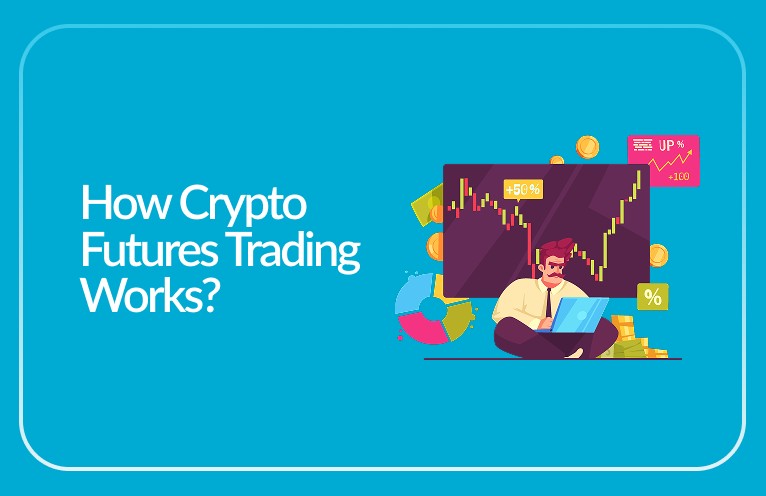
A futures contract is a promise to trade a coin at a set price later, or indefinitely in the case of perpetuals. You don’t hold the actual Bitcoin. You hold a paper claim that follows its price. This lets you speculate without a wallet. It is a significant part of how crypto trading works for advanced users.
Margin is the collateral you put down to open a futures trade. Leverage lets that small margin control a huge position. BitMEX, a derivatives exchange operating since 2014, pioneered the perpetual swap and allows up to 250x leverage. That is wild. A small price move can wipe you out. Applying 10x leverage lets a $1,000 margin control a $10,000 position.
Futures building blocks
- Contract size standardizes the trade
- Initial margin opens the trade
- Maintenance margin keeps it alive
- Funding rate ties perpetual price to spot
Going long means you bet the price rises. Going short means you sell first to buy back cheaper. Unrealised PnL is paper gain or loss while the position is open. Realised PnL is final when you close. Funding rate in perpetuals: if futures price is above spot, longs pay shorts. If below, shorts pay longs. This pushes prices back in line.
The biggest risk is liquidation. If the market moves against your leveraged position, maintenance margin drains, the exchange auto-closes, and you lose initial margin. Extreme volatility can trigger instant closes. Systemic and regulatory risks exist on unregulated platforms. This is the sharp edge of how crypto trading works .
What Cryptocurrency Is and How It Functions
Strategies For Buyers And Sellers
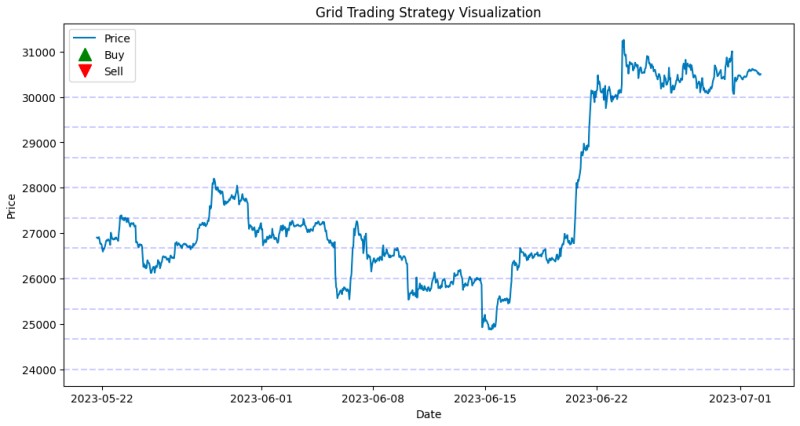
You need a plan. Dollar-cost averaging means buying a fixed amount on schedule, ignoring price swings. Grid trading sets buy and sell orders at intervals, good for sideways markets. Trend following rides moving averages. Mean reversion bets prices snap back. These are tools in the technical analysis of chart patterns and beyond.
Popular crypto strategies
- DCA buys regularly to smooth volatility
- Grid trading automates buys and sells in a range
- Arbitrage captures price gaps across exchanges
- Scalping takes tiny profits in seconds
- Copy trading mirrors another trader's moves
Grid trading works like this: pick a low point a and high point b. When price climbs above a, buy. When above b, sell. It does not predict direction. It simply harvests bumps. But in a strong trend it may buy high or sell low. A ideal crypto trade for one person might be dull for another. You have to match the method to your nerve.
Momentum trading seeks short-term moves up or down. Reverse trading jumps in when a trend loses steam. Day trading in this 24/7 world means holding seconds to a few hours, then selling. Arbitrage is near impossible by hand because gaps vanish fast. Bots handle it. All these sit under the wide roof of how crypto trading works .
Automated Bots And Algorithms
Bots are software that trades for you via exchange APIs. They follow rules you set. They don’t panic. They don’t feel FOMO. I like that they cut emotion. Platforms like Bitsgap and Tradetron let even amateurs build a bot. Some folks search for a free Coinbase trading bot option, and many places offer demo modes to test without cost.
Bot types you may see
- LOOP Bot runs a cycle and repeats
- GRID Bot works sideways markets
- DCA Bot stages buys over time
- COMBO Bot uses futures logic
- BTD Bot buys dips
Bitsgap supports over 17 exchanges and has seen millions of bots launched. The profit numbers sound nice but are not a promise. Use demo trading first. That is my tip. A bot’s parts are simple: rules to buy or sell, rules to close, rules for size. It monitors round the clock and reacts within your limits.
Tradetron links many exchanges at once, grabs best prices, and uses risk tools like volatility stops. Beginner mistakes with bots: pick the most complex first, run too many, use too much capital, skip demo, trade a thin low-liquidity pair, tweak too early, judge after one trade. Don’t do those. Keep it small and observable.
Copy Trading Mirrors Others
Copy trading lets your account follow a lead trader. You don’t pick the trades. The system copies their positions with your allocated cash. You control how much you put in, not their leverage. This is a shortcut to starting crypto trading for some. You mirror exposure, not exact size.
Copy trading roles
- Copied trader drives entries and leverage
- Copier sets allocation and can stop anytime
- Execution is mirrored but delayed by timing
- Risk is not controlled by the system
BitMEX offers reverse copy, flipping the leader’s direction. If they long, you short. It is a weird edge but shows the flexibility. Always start small. Allocation defines capital exposed. If you allocate 3,000 USDT, only that enters positions. Too high allocation pulls liquidation price closer. Leverage from leader passes to you, so a 10x move hits hard.
Drawdown matters more than ROI. Two traders can show same ROI with different pain: 120% gain with 65% drop vs 25% gain with 10% drop. Copy interfaces show both. Fees include trading, performance, and funding if derivatives. Funding can eat profit even if price moves your way. You can stop copying anytime; new trades halt, old ones follow settings.
Comprehensive Course From Novice to Professional Trader
Risk And Your Emotions
The 24/7 market brings extreme volatility. Double-digit moves in a day are normal. That triggers panic selling and FOMO. Automated trading helps remove the human itch. But you still must set stops and size positions. How crypto trading works includes surviving the downs. As we say, don’t skip this part: your head is the weakest link.
Don’t invest unless prepared to lose all money; high-risk investment, not protected if something goes wrong.
Liquidation in leveraged futures is brutal. If your margin runs out, the exchange closes you at a loss. Watch drawdown, not just ROI. A 120% gain with 65% drawdown is not the same as 25% gain with 10% drop. Risk controls include dynamic position sizing, volatility-adjusted stops, and spread across exchanges.
Beginners can use paper trading and pre-built strategies. The signal is already there in the chart. The challenge is keeping a clear head when the price swings at 2 a.m. I care about this because I’ve seen friends freeze. Bots don’t freeze, but they need good rules.
Getting Started Safely
If you wonder how to invest in cryptocurrency , start with education. Read about blockchain. Pick a solid exchange. Use only money you can lose. Paper trade before real funds. That is the sane path. The steps are not hard, but they need patience.
Steps to begin
- Learn market basics and security
- Choose an exchange with good liquidity
- Start with small spot positions
- Use demo or paper trading to practice
When you buy and sell cryptocurrency the first time, keep it tiny. Feel the order book. See the slippage. I still remember the weird calm of a limit order filling slow. Proper security means you control your keys if you move coins off exchange. But that’s later.
Platforms now give templates and education. They simplify the entry. But no one guards your money but you. The traits that make traditional markets calm are absent, so you become your own guard. That is the real talk on how crypto trading works .
What To Know About Crypto As Asset
Crypto is a network coin, not backed by a government. Bitcoin and Ethereum are the two big success stories due to huge user bases. Many small coins are scams or bubbles. If you look for best crypto to trade , stick to those two unless you research deep. The design’s built-in scarcity and secure transactions earned trust.
Weaknesses of crypto as asset class outweigh potential upside; would not advise people to buy; discourages speculation generally.
You can buy and sell cryptocurrency without a bank account. That helps the unbanked. But there are no dividends. You only make money if you sell higher. Failed exchanges leave little to repay. Be careful. Crypto creates fewer liabilities than real estate or stocks. Only exchange fee and capital gains tax at sale.
One credit union source says they would not advise buying, but if people speculate, do it in Bitcoin or Ethereum, least likely to fail. Perform due diligence. Everyone has different risk appetite. I think that’s fair. The market is open to all, but not kind to blind bets.
Common Questions Answered
People ask how crypto differs from stocks. It is 24/7, decentralized, no circuit breakers. Prices move on sentiment and news. For buying and selling cryptocurrency , you need an exchange account and some cash. Volatility is extreme, regulation varies by place.
Quick FAQ
- Is crypto futures same as spot? No, futures are contracts
- Can you short in futures? Yes, sell to buy back later
- Is leverage mandatory? No, but common
- Can you stop copy trading? Yes, anytime
- Do you control leverage in copy? No, only allocation
What makes prices move? Supply and demand, news, tech, sentiment, macro factors. Social media hits hard. Can losses exceed allocation? Losses hit allocated capital; high leverage can drain fast. LOOP Bot is a good first bot due to clear logic and demo test. That covers the bones of how crypto trading works .
The signal is there. Keeping a clear head is the hard part. I hope my notes help you trade sane. Whether you buy and sell cryptocurrency on a phone or run a bot, the market rewards calm and punishes rush. That is the simple truth I pulled from all this info.



Comments on “How Crypto Trading Works: From Decentralized Exchanges to Bots, Copy Trades, and the Blind Spot of Emotion”
No comments yet. Be the first to share your thoughts.