
What Is Crypto Dollar? The Dollar on Chain
So you asked, what is crypto dollar? In plain words, it is a stablecoin pegged one-to-one to the U.S. dollar, a coin that acts like a buck on a computer network. The source describes it as riding blockchain rails, meaning one token equals one dollar and moves without the bank’s clearance. I like to think of it as a dollar that lives on the chain, not in a vault. You can shift it fast without waiting for a permission slip from a bank.
The main word here is trust. A crypto dollar is only as good as the belief that the peg holds. Some are backed by cash sitting in reserve. Tether (USDT) was an early example, USD Coin (USDC) another. Both aim to be a digital dollar you can fling across borders. This is the core of what is crypto dollar: a token that mirrors the greenback, but only if we trust the hands behind it.
When I first read about this, the simple line was clear: a stablecoin pegged one-to-one to the dollar, running on blockchain, lets you move value without the bank’s clearance. That is the whole pitch. No fancy degree needed. But the label says it is a dollar, and it is hard to read that label from inside the jar - you still need to check who stands behind it.
How a Crypto Dollar Stays Pegged
The peg is the promise. For every token in circulation, the issuing company claims to hold one real dollar in a bank. That reserve is the bedrock of the crypto dollar’s value. If the reserve is solid, the token trades near a buck. As the source reminds us, you can’t see inside the jar. You have to trust the label.
Some stablecoins use code to keep the price steady, but the simple ones just hold fiat. Kraken noted that Tether was built on the Bitcoin blockchain using the Omni Protocol, with 1 USDT representing 1 US dollar held in reserve. That is a clear early model of the peg - a digital dollar anchored to a real one.
The label is hard to read from inside the jar - here are the basics you should know.
Binance $6.3B Heist: Largest Crypto Theft Ever
Tether and the First Crypto Dollar Support
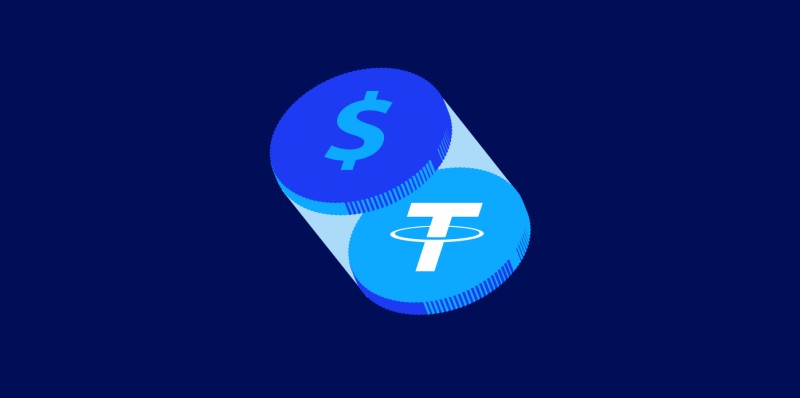
Kraken was pleased to add Tether (USDT) to its platform, giving folks a new digital asset that could be moved quickly to fund accounts and swapped for USD. The USDT/USD pair was available to trade. To deposit, you went to Funding, generated a new address, and sent from a Tether wallet. Simple steps, but they show the crypto dollar working in the wild.
Fees on Kraken ranged from 0% to 0.20%. They advised users to use limit orders to set their own price - smart advice for any market. The crypto dollar was not just an idea; it was live on an exchange, a real tool in a real venue.
Ways to use USDT on Kraken
- Send to your account using a deposit address
- Trade against the dollar in the USDT/USD pair
- Use limit orders to control your fill price
- Pay low trading fees, from zero to a fifth of a percent
Digital Dollar and Stablecoins Growth

Coinbase shared that over 50 million Americans and 400 million people globally have bought crypto, with illicit activity under half a percent of trades. So what do they do with it? A big use is digitizing the dollar. Stablecoins like USDC now exceed $100 billion in demand. A digital dollar helps those who cannot open a USD bank account - a quiet revolution at the edges.
The source notes dollar-backed stablecoin transactions approach $9 trillion a year - more than some card networks combined. Fast, cheap, global payments are a real win. You can send USDC in one second for about one cent. That is the crypto dollar at work, quietly rewriting the rails of value.
Crypto isn’t just a new asset class - it’s the future of money.
What Does Crypto Do Beyond the Dollar
When we ask what crypto does beyond the peg , we see more than just a stablecoin. Bitcoin is a return to sound money with fixed supply. NFTs let artists sell direct. Decentralized social media gives you control of your data. But the crypto dollar is the friendly front door - it takes the wild idea of coins and ties it to a buck you know.
I care about this because regular people notice rising prices and feel the system is off. A crypto dollar does not fix inflation alone, but it offers a tool - you can hold value outside a bank. That is a small step toward open money. The source says 87% of Americans feel the current financial system needs an update, and younger folks often skip the old system entirely.
Crypto Digital Assets and Blockchain Basics
To get the world of crypto digital assets talk, we need a quick plain explanation of blockchain technology . A blockchain is a shared ledger. Many computers keep the same record of who sent what. No single bank controls it. Crypto uses cryptography to lock the data so it stays safe.
The source from Nexo says crypto refers to digital assets that use cryptographic techniques to secure transactions, running on blockchain networks where deals are recorded clear and permanent. That is the ground for any crypto dollar. Without the chain, the token is just a number. You store coins in a wallet and send with keys - the primitive machinery of trust.
Parts that make crypto work
- Blockchain: a decentralized ledger of all trades
- Public and private keys: codes to authorize moves
- Consensus: network agrees on truth
- Crypto wallets: where you store your coins
Dollar Cost Averaging in Crypto: The Disciplined Approach
What Is a Token in Blockchain
So what a token is on the blockchain ? A token is a unit on the chain. It can be a coin like Bitcoin, or a stablecoin like USDT. Some tokens are for voting, some for payment, some just for fun. The crypto dollar is a payment token linked to the US dollar.
Classification info shows not all tokens are decentralized. A stablecoin issued by a firm is centralized; Bitcoin is open-source and community run. Knowing the type helps you judge risk. I find this key: a token’s issuer tells you a lot about whether the peg is real or just words.
Any crypto ≠ decentralized crypto.
Myths About Crypto and the Dollar
Some say crypto is only for crime. A study found illicit use was a tiny fraction, like .34% of chain trades. The UN says fiat crime is bigger by far. So the crypto dollar is not a haven for crooks. Another myth: crypto has no value. Neither do dollars backed by gold since 1971 - the buck is just trust too. Canada dropped gold backing in 1929.
Environment worry? Crypto power use is between .4% and .9% of world electricity. Some mining uses wind or solar. Not perfect, but not the monster some paint. I’d say read the facts before you fear the tech. Also, a famous pizza buy in 2010 used 10,000 Bitcoin for two pies, worth about $25 then, showing how far the story has come.
Bitcoin is the largest cryptocurrency by market cap, and there are over 10,000 different coins in circulation. That shows the space is wide, but the crypto dollar stays a small, steady corner of it.
Which Is the Best Digital Currency for Stability
If you want calm, which digital currency is best for steadiness ? The crypto dollar types win. Bitcoin jumps around. Stablecoins aim to hold one dollar. USDC and USDT are big names. They are not risk-free, but the peg gives a soft seat.
Brooklyn Coop notes Bitcoin and Ethereum are the only real success stories due to network effects and trust. For a dollar peg, those two also have large user bases. I’d stick to known stablecoins, not some obscure token. The source warns obscure coins are more likely to pop or be scams.
Why stablecoins feel safer
- Backed by reserve dollars or equivalents
- Low price swing versus Bitcoin
- Used for daily payments and remittances
- Accepted on many exchanges like Kraken
Smart Contract Platforms and Stablecoins
You may ask what a smart contract platform is . It is a blockchain that runs code automatically. Ethereum is one. Stablecoins like USDC often live there. The code can move funds when conditions meet, no middleman. This helps the crypto dollar flow smooth.
Some chains are built for speed and low cost. Layer 2 solutions scale the base chain so a send costs a cent. That is why the digital dollar can beat wire transfers that cost thirty bucks and take days. The source from Coinbase says merchants lose about 2% on card swipes, and crypto fixes that with direct value move.
Hedera Blockchain and Other Networks
There are many chains beyond Bitcoin. The Hedera blockchain is one example of a different network model. Some use proof-of-stake, not mining. The point is a crypto dollar can issue on various rails. Tether started on Bitcoin’s Omni, but later spread. Diversity gives users options.
Classification text says more than 30% of open-source crypto projects tie to a centralized firm. So even on chains like Hedera, check who runs it. I always look at the issuer before I trust a token. A coin is only as good as the hands that hold the reserve.
List of Crypto Currency Types
Here is a map of crypto currency types from the source. It helps to see the terrain. Not every coin is a crypto dollar. Some are collectibles, some utility, some security tokens. Knowing the bucket saves you grief.
Common crypto categories
- Payment tokens like Bitcoin and stablecoins
- Utility tokens for app access
- Security tokens tied to investments
- Non-fungible tokens (NFTs) for art and collectibles
Tyler Cowen: Two Futures for Cryptocurrency
Crypto Currency Crash Course on Risks
This crash course in crypto currency would be empty without risk. Crypto is volatile. The source warns not to invest more than 1-3% of your portfolio in speculative assets. One golden rule: only put in what you can lose. It could go to zero as easy as double.
Retirement plans now sometimes offer crypto. But labor officials caution fiduciaries to exercise extreme care. If you buy through a 401(k), know you may bear responsibility. I’d talk to an advisor who knows your goals. The report says data on these holdings is thin, so you must watch your own cash.
One golden rule in crypto is not to invest anything you aren’t willing to lose.
Buying and Using a Crypto Dollar
To get a crypto dollar, you pick a platform. Nexo says you can buy with card, bank, or asset balance. You create an account, verify ID, add funds, select the coin, and secure it in a wallet. That is the same for USDC or USDT. Start small if you are new.
Dollar-cost averaging is a method where you buy a fixed amount over time. It helps avoid bad timing. The source tweet from Nexo breaks it down. I like this because it takes emotion out of the trade. You set a schedule and stick to it, rain or shine.
Steps to buy a stablecoin
- Choose a platform that fits your needs
- Create account and verify identity
- Add funds via bank or card
- Select USDC or USDT and place order
Retirement Plans and Crypto Dollars
Some employer plans let workers pick crypto in their 401(k). This is high-risk due to price swings. The government report says data on these investments is thin. They can’t measure how much folks hold. If you use a self-directed window, you are on your own to monitor.
Federal law under ERISA requires fiduciaries to act in your best interest. But caution is urged before adding crypto to core options. My take: keep retirement money in boring stuff, and play with crypto dollars only with spare cash. The unbanked like crypto because no bank account is needed, but retirement is different.
What Blockchain Is Polymarket On
You might wonder what blockchain Polymarket runs on while reading this. That app is a prediction market, not a stablecoin. But it shows the range of chains. Our crypto dollar talk stays on Bitcoin, Ethereum, or similar rails. The key is the peg, not the chain name.
I mention it because the crypto space is wide. A world of crypto digital assets view includes many experiments. Stablecoins are the part that touches the dollar. That is what we care about here. The source notes classification matters for regulation and for your own risk check.
The future of money is more open, free, efficient, and it's powered by crypto.
The Peg in Plain Terms
We covered a lot. The question what is crypto dollar boils down to trust and tech. A token backed by a dollar, on a chain, gives you fast value move. It is not a bank, it is not a cure-all. But it is a real tool that many now use daily.
Hey, don’t skip the part about reserves. If the company behind the stablecoin fails, the peg can break. Read the docs. Start with known names. And never risk rent money. That’s my plain advice as one blogger reading the same sources you can. The crypto dollar is simple in idea, tricky in practice, so keep eyes open.


Comments on “What Is Crypto Dollar and How It Works for You: The Innovation of the Peg and the Trust We Cannot See”
No comments yet. Be the first to share your thoughts.