
What Is Cryptocurrency, Really?
There’s a moment when digital money stops sounding like magic and starts looking like code. This crypto currency crash course breaks down the basics so you can start with less confusion and more clarity. Think of cryptocurrency as a decentralised digital medium of exchange and store of value. Unlike the dollar or the euro, it is not controlled by any government or bank. It is program code that lives in a network space, no more, no less.
You might ask what cryptocurrency actually is and why it exists . The idea of electronic money had floated around for decades. The first real step came when a person or group under the name Satoshi Nakamoto published the Bitcoin white paper in 2008. In 2009, the first Bitcoin software ran and the genesis block was forged. That is how the world learned about blockchain tech.
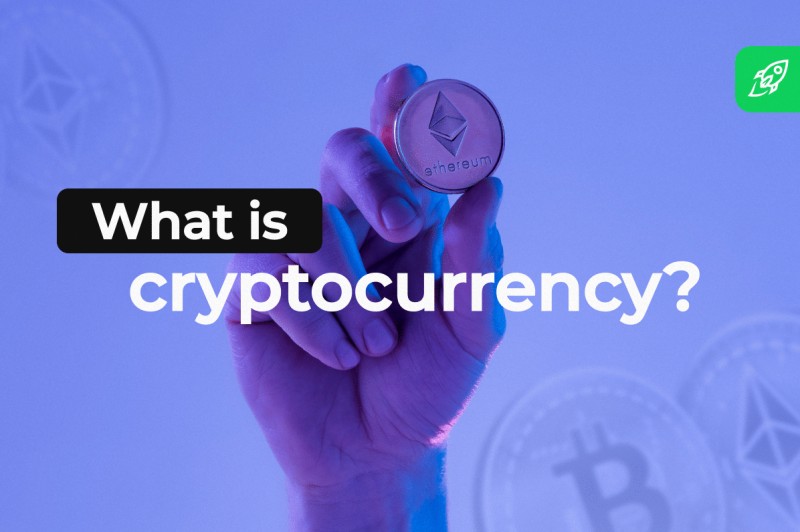
Today there are many popular cryptocurrencies like Ethereum, Solana, and Toncoin. Each is a form of digital cash with no physical offline twin. A coin is protected from fraud by a hash. All digital money exists only in the network space. The shift to digital value feels strange at first, but it is real. The network runs day and night, letting anyone with an internet connection send funds without a middle man.
Some call crypto free from restrictions because no central server can block it. In a bank, a main server could be shut and data lost. In crypto, every node keeps a copy of the ledger. That copy is the blockchain, a digital record of all moves. If some nodes drop, others still share the truth. The system is built to survive the disappearance of any single part.
The Shape of Blockchain Technology
A clear explanation of blockchain technology helps you see how crypto stays safe. The blockchain is a public ledger of all transactions, a chain of linked blocks that hold data. Every computer in the network, called a node, keeps a copy of this ledger.
In a bank system, there is a central server. In crypto, there is no hierarchy. Nodes connect and pass info to each other. If some nodes go offline, the others still work. This makes the network hard to shut down or censor. The ledger keeps records that cannot be changed without huge effort.

When new transactions happen, they go into a pool. Nodes check them and try to make the next valid block. Once added, the block stays forever. This is the base of trust in crypto. You do not need to know the math to use it, but it helps to know the shape.
The blockchain stores every transfer from day one. It is not owned by a firm. Instead, the group of nodes agrees on the state through consensus. That shared agreement is what makes the system fair. No single user can rewrite the past without outrunning the whole network.
How a Crypto Transaction Travels
Let’s walk through a simple send. Alice wants to send 1 Bitcoin to Bob. She uses a wallet app to create a transaction with the amount, Bob’s address, and a digital signature made with her private key. Nodes check if Alice really has that coin and if the signature is good.
After the check, every node updates its copy of the blockchain with the new info. Bob gets a note that he received the money. The wallet is just software that manages keys and sends or receives crypto. This whole process can take minutes or hours based on network load and the fee paid.
The journey of a Bitcoin transaction starts with the user signing with a private key. Then it broadcasts to the network and sits in a pool. Miners pick it up, verify, and include it in a block. Once mined, it is confirmed. That is the life cycle in short.
A wallet address comes from a private key. The space of possible keys is huge, about 2^256. That is a number so big it beats counting stars. The chance of two people hitting the same address is near zero. Security rests on math that is hard to reverse.
Stopping Double Spending: The Proof of Work
Digital files can be copied, so a big risk is double spending. That means spending the same coin twice. Bitcoin solves this with a consensus mechanism and a reward for work. Nodes race to build valid blocks by solving a hard math puzzle.
The puzzle uses the block header and a random number called a nonce. They hash the header and if the result is below a target, the block is valid. If not, they change the nonce and try again. The first node to succeed gets a block reward and transaction fees. This is proof of work.
Parts of a block header
- Version number
- Previous block hash
- Merkle root of transactions
- Timestamp and bits target
- Nonce used for guessing
For example, block #286819 (mined on 2014-02-15) had a specific hash and nonce. The bits field shows the target in compact form. The network adjusts difficulty every 2016 blocks to keep block time near 10 minutes. This keeps the system steady.
A purely peer-to-peer version of electronic cash would allow online payments to be sent directly from one party to another without going through a financial institution.
The coinbase transaction is the first line in each block. It creates new coins from nothing as reward. Regular transactions only move coins that already exist. This is how supply grows in a controlled way. Miners spend electricity and compute, and the network pays them in fresh crypto.
Bitcoin and the Halving: Digital Scarcity
Bitcoin has a fixed supply of 21 million coins. The rate of new coins is cut in half roughly every four years. This event is called the halving. It mimics the scarcity of gold and makes Bitcoin deflationary over time.
Just over 2 million bitcoins are left to mine, and the last one is expected around 2140. The slow reduction keeps supply controlled. Some see Bitcoin as “digital gold” and a hedge against inflation.

A Bitcoin ETF approval by US regulators is a milestone. It lets people buy and sell like a stock through a brokerage. That lowers the barrier for everyday folks and adds some oversight. Pension funds could gain exposure this way.
The halving is not a crash or a boom by itself. It is a code rule written long ago. By cutting new supply, the plan aims to avoid sudden inflation. Many watch it closely, but the core design stays the same year after year.
Coins, Tokens, Stablecoins and the Uniqueness of NFTs
There are many virtual currencies besides Bitcoin. These are called altcoins, like Ethereum and Litecoin. They have their own blockchain and work as full digital money. Then there are stablecoins pegged to fiat or gold, such as USDT and USDC.
Tokens are different. They live on another blockchain and are not full money. NFTs, or non-fungible tokens, are unique items on the chain. They can represent art, a tweet, or even a deed to real world stuff. The Hedera blockchain is one of many networks that support such tokens.
Main types of crypto assets
- Altcoins with own chain
- Stablecoins pinned to USD or gold
- Tokens without own chain
- NFTs as unique records
People often ask which digital currency fits your need to hold. There is no single answer. Each has trade-offs in speed, cost, and use. Bitcoin is the most known, but others serve different needs.
Stablecoins try to keep a steady price. Tether and USDC follow the dollar. Some newer models use code alone to hold the peg, but those have faced trouble. NFTs started as colored coins on Bitcoin back in 2012, then grew into art and game items.
DeFi: The Rise of Decentralized Finance
DeFi means platforms that use smart contracts to recreate loans, interest, and exchanges without banks. You may wonder what a smart contract platform really is like Ethereum. It is a blockchain that runs code automatically when conditions are met.
Early on, there were no stable assets or scaling. Over time, stablecoins appeared, then decentralized exchanges like Uniswap used an automatic market maker model. Later, layer 2 solutions helped speed and cut cost. Solana launched as a proof of stake chain with very low fees.

Liquid staking let users stake ETH and get a token they can use elsewhere. The space grew fast with reward tokens and yield farming. Some call it a fun summer of DeFi, but risks exist as we will see.
From 2017 to late 2019, the field changed a lot. First there was a big bubble and crash. Then stablecoin races, then scaling fixes. Institutional firms joined and added liquidity. The story shows crypto is not static, it keeps morphing.
What Crypto Can Do for the Curious
Let’s look at what crypto actually does in real life. It can move value across borders cheaply, which helps remittances to places with weak banks. About 40% of people worldwide are unbanked, and crypto gives them a way to join finance.
It also resists freezing. When WikiLeaks had donations frozen by card firms, crypto kept funds flowing. Privacy coins like Monero hide details. And tokenization can turn real estate or art into tradable digital tokens.
Common crypto use cases
- Day-to-day digital payments
- Cheap money transfer and remittances
- Trading with crypto or fiat pairs
- Store of value against inflation
- Tokenization of real world assets
But remember, volatility is high. Most shops do not take crypto for groceries yet. And you still must pay taxes in your national currency. The tech is useful, but not a magic fix.
Another use is as a tool against corruption in places where local money fails. Countries with huge inflation saw people turn to crypto to keep some buying power. The ledger is open, so supply and moves can be checked by anyone.
Crypto Storage: Keeping Your Coins Safe
This part is important, pay attention. If you lose your private key, your coins are gone forever. No bank will refund you. Wallets range from phone apps to paper sheets. The easier a wallet is to use, the less safe it may be for long storage.
Coinbase is fine for base purchases, but bank transfer can take days. Credit card buys are discouraged due to cost. Move coins to a wallet you control if you plan to hold. Never share your seed phrase with anyone.
Ways to store crypto
- Mobile app wallets
- Paper wallets with keys printed
- Exchange accounts for trading
- Hardware wallets for cold storage
One reader noted the space has lots of insider lingo. That is why this crypto currency crash course should teach storage in plain words. You are solely responsible for your coins, so learn this well.
No regulatory body will rescue you if a thief takes your funds. The trade-off for freedom is personal duty. A small habit like writing keys on steel can save you from a lost phone. Take it slow and test with tiny amounts first.
The Map of Rules and Legal Status
Governments view crypto differently. Some ban it, some allow it, some stay undefined. For example, China and Bolivia illegal; USA and Japan legal; Canada and Russia undefined per old tables. Rules change, so check local law.
In the US, anti-crime rules extend know-your-customer to exchanges. The IRS taxes crypto as property. Securities laws may apply to tokens that act like stocks. The environment is also a topic since mining uses power.
Legal stance examples
- Illegal in Algeria, Egypt, Nepal
- Legal in Nigeria, South Africa, UK
- Undefined in Namibia, Saudi Arabia
- Regulated as property for tax
Ethereum used as much power as a country before switching to proof of stake, cutting energy use by over 99%. That shows the network can adapt to concerns.
A federal report once pushed for proof of work to move to proof of stake to save energy. Ethereum did just that. Mining is still legal where crypto is legal, but the carbon talk pushed change. Laws vary, so read up before you act.
Investing a Little: A Calm Allocation
One investor shared a simple plan: keep most wealth in stock index funds, put a small 2% into crypto. He rebalances when the slice gets too big or small. This conservative take avoids messing up long term growth.
He said some smart people will find useful things with crypto, and he did not want fear of missing out to hurt his plan. That is a calm way to think. cryptography online courses can help you judge tech merit yourself.
Some smart people will figure out some useful things with crypto, and I do not want my FOMO to affect other aspects of my financial plan.
Not all coins go up. A tip from a crash course says it is mathematically impossible for every coin to moon. Be wary of buzz and rug pulls. Small allocation keeps sleep easy.
The market cap has been as high as $2.6 trillion at times. That shows big money flows in, but also that swings are huge. One writer compared pre-2018 tokens to bonds with no payout, giving zero long term value. Keep a cool head.
Reading the Critics and the Caveats
Not everyone is sold. Some readers said the topic is too jargon heavy. One said he still wonders if crypto is just for illicit buys or can pay taxes. A commenter noted most coins are less private than banks, and Chainalysis can trace you.
Others argued stablecoins still lean on the dollar system, and DeFi cannot fully leave traditional finance. One wrote that many projects are scams avoiding regulation. Another said if you treat pre-2018 tokens as bonds with no payout, they are worth zero long term.
The only problems it solves are the ones it has created.
I think these views matter. A crypto currency crash course should show both hype and hard questions. You decide what fits your life.
A few voices even said finance already has plenty of bs, and crypto might just eat some profits without solving much. That is a fair point to weigh. No tech is pure good or pure bad, and this one is young.
Learning More from the Crash Course
To go deeper, you can how to get started on Coinbase and buy a small amount to learn by doing. Sign up takes time for bank link. A good cryptocurrency book can add context beyond blog posts.
There are free resources like Blockgeeks for wallet overview and bitcoin.org for dev guides. The Business Anthropology blog has many posts on NFTs, rollups, and tokenization. They even link a Telegram group for news.
Steps for beginners
- Check coin activity on investing sites
- Read storage guides before buying
- Sign up on a safe exchange like Coinbase
- Learn blockchain via simple articles
Some folks wonder which blockchain Polymarket lives on but that is a niche question. The main point is to build real understanding, not just chase ticks.
You can also try building a basic blockchain on your computer with a python tutorial. That hands-on step shows how blocks link. It is not required, but it kills mystery fast. The more you touch, the less you fear.
A Few Loose Ends, Answered
Let’s touch loose ends. We covered what cryptocurrency is at its core basics. For the curious, the Hedera blockchain is just one of many ledgers. And what a smart contract platform is we said: code that runs on chain.
If you still ask which digital currency is best , look at your need: speed, privacy, or store of value. And what crypto does depends on the app built on top. That is the map past the hype.
Money that does not exist, yet holds value in the network.
I hope this crypto currency crash course gave you a clearer view. The tech is young but the ideas are simple once stripped of jargon. Go slow, learn, and stay safe.
One last note: the space will keep changing. New chains, new rules, new tools. But the core idea of peer-to-peer value stays. Keep this crash course handy and revisit when you need a plain refresher.


Comments on “When Peer-to-Peer Meets the Curious: The Crypto Currency Crash Course”
No comments yet. Be the first to share your thoughts.