
Flash Loan Crypto Basics
There’s a moment in the life of any great DeFi instrument when it stops being a tool and turns into identity. Flash loan crypto is a weird but cool tool. It lets you borrow huge sums of crypto with no collateral inside one single blockchain transaction. I find the idea both neat and a bit scary, like the founder’s curse: the traits that make it dangerous can later make it brittle. The loan must be paid back before the block ends or the whole thing undo itself. That atomic model is the core of how it works. In old finance, a lender worries you might run off with the money. In DeFi, the smart contract either finishes all steps or rolls back everything.
No credit check, no collateral, just code that enforces repayment. This makes flash loan crypto super fast and capital efficient. You can move big money for a few seconds if you know the tech. Before 2020, borrowing in DeFi needed over collateral. Then Aave popularized the uncollateralized single tx borrow. By the next year, individual tx reached hundreds of millions. Later Polygon and BSC adopted it, cutting gas costs. It is hard to read the label from inside the jar, but the code is the label.
How Flash Loan Crypto Works
The lifecycle is short. A smart contract starts the loan by tapping a lending pool. Then the funds get used right away for some planned op like arbitrage or swapping collateral. At the end of that same transaction, you must return the full amount plus a small fee. On Aave that fee was around 0.09% in some versions, but it can change. All actions happen within one blockchain transaction. The clock is the block, and the block waits for no one.
Steps In A Flash Loan
- A contract pulls funds from a liquidity pool.
- The borrowed crypto is put to work in a quick trade or swap.
- Profits emerge if prices differ across venues.
- The loan plus fee is settled back in the same block.
- If not repaid, the chain wipes the tx like it never happened.
All of this happens inside one atomic transaction. Either every step succeeds or none get recorded. That is why lenders face almost no credit risk. But you still need to pay gas, the network fee, even if the deal fails. So watch out for that. The mechanism works because blockchains execute tx atomically. I think that is a clever bit of code, reminiscent of the jigsaw where the picture only emerges when all pieces hold.
Flash Loans On Blockchain Platforms
Flash loan crypto runs through smart contracts that act as both guarantor and executor. Funds live only for a few seconds inside a single tx. Virtual machines like the EVM on Ethereum make this possible by executing ops atomically. The protocol does not care who you are. It just won't let the tx finish until the debt is settled. If the debt is not settled by the end of the transaction, it is automatically cancelled. The label is written in code, and you can’t read it from inside the jar.
If the debt is not settled by the end of the transaction, it is automatically cancelled.
I had to learn what a smart contract platform actually is before any of this made sense. Basically it is a chain where code runs exactly as written. That trust replaced by code is what lets big sums move with no middleman. In the DeFi ecosystem, the algorithm simply won't let the transaction finish until the debt is settled. This is why blockchain enables large sums without collateral or intermediaries. The Pygmalion risk here is minimal because the creator is the code, not a founder’s ego.
What You Need To Use Flash Loans
Getting into flash loan crypto is not like clicking a borrow button. The main requirement is tech skill. You must write or deploy a smart contract that does the whole op automatically. If you can't code, there are builder tools like DefiSaver or Furucombo that give a simple UX. You also need some crypto to pay gas. The barrier is not capital, it’s cognition - Miller’s seven plus or minus two doesn’t help when the table is a blockchain.
That fee hits even when the trade loses money. And you must check liquidity on the exchange. Without deep market know how, this high leverage tool is rough to use. I wouldn't touch it without practice. It is crucial to account for price slippage during the transaction. Verify there is enough liquidity. Without a deep understanding of tech and market, it is practically impossible to use well. The F.O.T.O. dilemma doesn’t apply here; you must throw out any illusion of simplicity.
Key Requirements
- Ability to code a contract in Solidity or use a builder.
- Some crypto for gas fees regardless of success.
- Understanding of price slippage and liquidity.
- Audited contract and verified protocol choice.
Common Uses For Flash Loan Crypto
The most common use is arbitrage. That means buying a token cheap on one exchange and selling high on another, all within the same tx. Folks also use it for self liquidation to avoid penalties, or debt refinancing. It packs many ops across protocols into one shot. Flash loans are also applied for rapid collateral swaps without full loan repayment. The positive deviant in DeFi uses the rogue success of atomic timing.
When you look at the varied types of cryptocurrency trading , flash loans fit the quick arbitrage style. Here is crypto trading explained in plain terms simply: you borrow, trade, repay, keep spread. To find the the best crypto trades , you scan for price gaps. And you must know how crypto trading works on chain before trying. All actions must be precisely calculated as the chance lasts seconds. The puzzle outgrows the table if you can’t hold the pieces.
Where To Get Flash Loans
Several platforms offer flash loan crypto primitives. Aave is the big one that popularized it around 2020. Uniswap has flash swaps. Beyond Ethereum, networks like Binance Smart Chain via PancakeSwap and Polygon have lower fees. Choice depends on liquidity and token type. Flash loan style primitives exist on many protocols. The diffusion of this innovation collapsed the curve from thesis to trillion in moments.
Platforms Mentioned
- Aave on Ethereum with many assets.
- dYdX for derivatives and advanced tools.
- Uniswap with flash swap style function.
- PancakeSwap on BSC for cheaper gas.
Remember these are DeFi only. No central service gives zero collateral loans like this. If you wonder where a beginner might start investing in crypto , these are not the entry point. And when friends ask how one can invest in cryptocurrency , I point them to simpler backed loans. Always do your own research before using any platform. The Santa rally of easy yields can camouflage the rot.
Flash Loan Crypto Vs Crypto Backed Loans
Flash loans are nothing like a normal crypto loan. A bitcoin backed loan from Ledn or similar lets you hold BTC and borrow fiat for months. Flash loan crypto must repay in seconds. The table below shows the split. Crypto backed loans need collateral and are good for long term hold. Flash loans are for arbitrage seekers only. The contrast is the difference between a marathon and a blink; the athlete and the photon.
Feature Differences
- Flash loan needs coding; backed loan does not.
- Flash loan is seconds; backed loan up to 12 months.
- Flash loan has high tech fail risk; backed low.
- Flash loan no collateral; backed needs Bitcoin etc.
If you want the best crypto to trade with no personal funds, flash loan is the tool. But for long term hold, a backed loan is safer. You can sell or buy cryptocurrency in one block with flash loan but not for holding. The use case is arbitrage and DeFi trades, not general borrow. It is hard to read the label from inside the jar, but the jar is the block.
Risks With Flash Loan Crypto
Flash loan crypto itself is not a bug, but it often feeds attacks on weak code. Hackers use logic errors, reentrancy, or price manipulation. Market risk is real too: low liquidity causes slippage that kills the deal. If the tx fails, you lose gas but not the principal. The main market risks are volatility and low liquidity. The Gray Rhino of smart contract debt is obvious in hindsight, unheeded in foresight.
With a flash loan, an attacker can exploit a tiny error to drain a protocol in seconds.
Main Risk Points
- Execution risk from smart contract bugs.
- No legal recourse in pseudo anonymous DeFi.
- High tech barrier for normal users.
- Vulnerability to arbitrage fail and hacks.
One more: oracle reliance. If a protocol uses one price feed, a flash loan can twist that price. I read that decentralized oracles and circuit breakers help. But even audited code can fall. A small pool can cause sharp price slippage rendering deal unprofitable. So consider the actual market state at the moment of op. The Shakespearean twist: the model that made you successful becomes the prison.
Real Hacks And Exploits
We have seen ugly cases. Beanstalk Farms in 2022 lost $182M via flash loan governance vote. Cheese Bank in 2020 lost $3.3M by oracle manipulation. Euler Finance in 2023 lost about $197M from a mint bug. These show how fast things break. The Beanstalk perpetrator took flash loans from Uniswap, Aave, SushiSwap to get governance tokens. The curve collapses from bell to shark fin when the exploit hits.

The hacker ended up returning the funds, confused by user pleas and global probe.
Beanstalk allowed proposal and vote same block, no cool off. Cheese Bank used Uniswap oracle alone. Euler had eToken and dToken mismatch. All these were DeFi protocols that thought they were safe. Lesson: code is law but code can be wrong. Cheese Bank did not survive. Beanstalk appears abandoned now. The exploit harmed reputation leaving it a cautionary tale. The founder’s curse visits DeFi too: protect the creation instead of the problem it solved.
Balancer Hack And Rounding Error
In 2025, Balancer disclosed a hack that drained over $100M. The root was a rounding error in old v2 math. A hacker used flash loan crypto to borrow stablecoins and repeat tiny trades that compounded the rounding gap. The exploit hit on November 3 of that year. Balancer is an AMM with reserves of two cryptos, price set by formula. The silent slope of a rounding error became a cliff.

Downstream forks like BEX paused to avoid loss. TVL on Balancer dropped near 75% after. Over ten audits missed the bug. This shows even small precision flaws turn big with flash loans. White hats got some funds back later. The attacker exploited internal accounting quirk where rounding down let micro gains stack. By layering many trades in one atomic op, they siphoned value. The safest road to Hell is the gradual one, until it isn’t.
Balancer Takeaways
- Use integer math or high precision libraries.
- Don't rely on single oracle price feed.
- Add circuit breakers for odd outflows.
- Keep auditing and on chain monitoring.
Euler Finance Attack Details
The Euler case is a deep one. The attacker took a $30M DAI flash loan from Aave, deposited, borrowed 10x, and looped the mint function. They used Tornado Cash for gas. The flaw was in DonateToReserve that burned eTokens but not dTokens. This made fake collateral look low debt. The pattern was situational clarity for the attacker, blindness for the protocol.
After the steal, the hacker sent most back. Some say user pleas moved them. Euler token dropped 45%. The event is a benchmark for how flash loan crypto amplifies accounting bugs. Mitigations include symmetric token burns and real time monitoring. The hacker hardcoded contract so personal wallet got most funds. They moved some to Tornado Cash after. The rhino was charging; few noticed.
Flash Attacks Data From DeFi
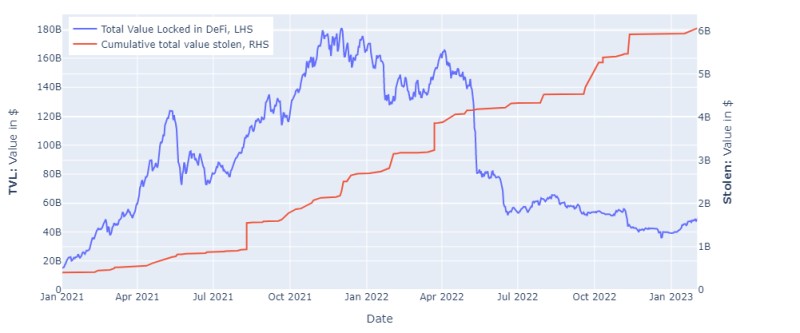
Bank of England folks analyzed Aave flash loans. They found top borrowed assets were stablecoins, BTC, ETH. Gas cost averaged 15x normal tx because logs per tx hit 35-70 vs 5-10. Over $6.5B stolen in flash attacks overall. That is wild. They gathered 60,000 unique tx from Aave V1 and V2. The data tells a story of a double-edged sword, as most rhymes do.
Top Flash Loan Attacks
- Cream Finance 2021: $130M stolen via $2.1B loan.
- Inverse Finance 2022: $5.8M stolen.
- Beanstalk 2022: $181M total via two loans.
- Many others show loans used to exploit code.
The data tells me flash loan crypto is a double edge sword. It helps arbitrage but fuels exploits. Decentralized oracles and time locks could cut risk. But the tech is young. Out of roughly 150 known attacks, 45 used flash loans. That is a big chunk. The puzzle outgrows the table when the pieces multiply faster than our ability to hold them.
How To Stay Safe With Flash Loans
If you still want to try, pick verified protocols and audit your contract. Avoid random bots from repos. Use decentralized price feeds, TWAP, circuit breakers. Calculate gas and slippage before you hit go. Safe use begins with selecting a verified protocol and auditing your own smart contract. Planned abandonment of hubris is step one.
Never trust, always verify the execution logic of the smart contract.
Safety Habits
- Work only with public audited platforms.
- Test on testnets before mainnet.
- Check liquidity depth on target pools.
- Set max gas to limit loss on fail.
I also suggest learning what blockchain Polymarket operates on just to see other DeFi uses, but stay focused. Flash loan crypto needs respect. Hey, don't skip this part if you plan to code. One should not trust dubious bots from open source repos. They may contain vulnerabilities or malicious code. The F.O.T.O. dilemma warns us that keeping everything can be as dangerous as throwing out the wrong thing.
Legal And Tax Notes
Tax folks may treat each trade inside a flash loan as separate event. Some regions want every crypto to crypto swap listed even if in one tx. Rules on flash loan crypto are same as other crypto, but SEC has eyed DeFi. No special law yet. Generally flash loans are regulated like other crypto activities. The law moves at human speed; diffusion moves at digital speed.
Disclaimer: I am not a lawyer. Check local pro for your case. The lack of recourse is real; many protocols are pseudo anonymous. So if code fails you, you may have zero help. A misconception is to treat everything within a flash loan as just one event. The reality is many jurisdictions expect you to list each activity within your flash loan. It is hard to read the label from inside the jar, and harder to sue the jar.
Who Should Use Flash Loan Crypto
Truth is, flash loan crypto is for advanced arbitrage seekers only. If you need money for a day or a car, forget it. The architecture blocks long use. It is a specialized tool for short, time sensitive trades. You wouldn't use a flash loan for prolonged time, even a day, as it's not possible. The protagonist’s trap is to think tomorrow’s tool fits yesterday’s need.
For most people, a bitcoin backed loan is a calmer path. Ledn-style products give clear terms and custody. Flash loans are not for general borrow needs. They push boundaries but not like a normal loan. Rather, flash loans are for one specific demographic: advanced arbitrage seekers. The Santa rally of leverage can camouflage the retreat.
Why Some Platforms Skip Flash Loans
Ledn says they focus on established services. Flash loan crypto needs repay in seconds, built for devs not everyday users. Risks from code and network stability are high. Lack of regulatory clarity scares them off. They instead provide bitcoin backed loans with clear terms. The Gray Rhino of regulatory uncertainty is easier to ignore than to prepare for.

They offer B2X instead: use BTC as collateral, borrow fiat, buy more BTC. That is 12 months, flexible, no coding. I think that fits regular folks better. But if you crave flash loan crypto, know the blind spots first. B2X involves leverage that amplifies losses if BTC drops. That is a risk but clear terms help. The safest choice is not to keep everything, but to keep purposefully - and sometimes that means choosing the slower lane.



Comments on “Flash Loan Crypto: How It Works, What It’s For, and the Key Risks You Should Know”
No comments yet. Be the first to share your thoughts.